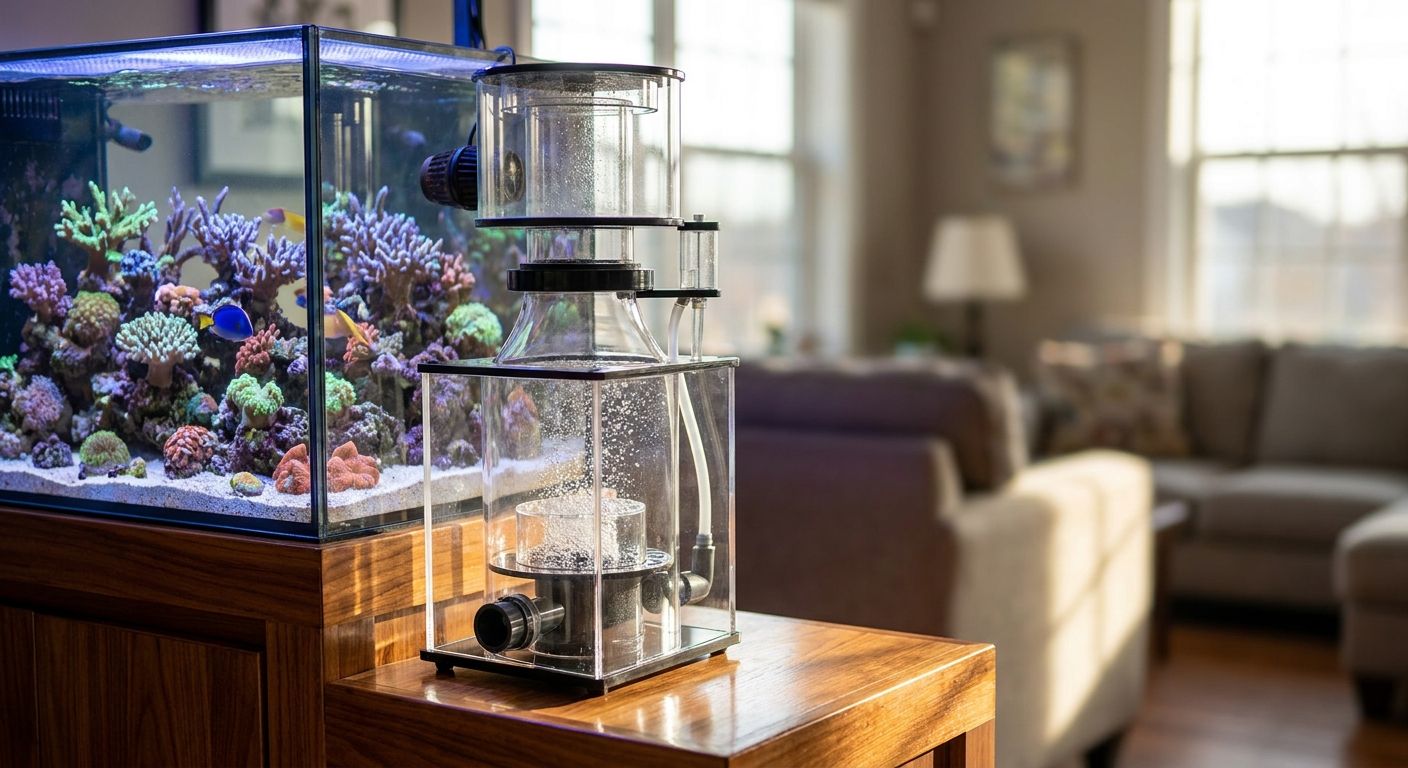
Choosing the best protein skimmer for a reef tank comes down to matching pump type and footprint to your sump, not chasing the biggest box on the shelf. This guide ranks five options for 2026 reef tanks across overall performance, nano setups, budget, beginners and no-sump systems.
Best overall: Quantum 120 Protein Skimmer. Best for nano tanks: Curve 5 Extreme Protein Skimmer. Best budget option: Reef Octopus Classic. Best for beginners: Bubble Magus. Best hang-on-back: Tunze Comline DOC.
- Quantum 120 Protein Skimmer is the best protein skimmer for reef tank overall in 2026 on cone design and pump control.
- Curve 5 Extreme Protein Skimmer wins for nano and compact sumps where footprint matters more than raw output.
- Reef Octopus Classic is the budget pick for standard sumps that don't need a DC controller.
- Bubble Magus suits first-time reef keepers who want a simple AC-pump skimmer with fewer settings to tune.
- Tunze Comline DOC is the only hang-on-back option here, built for tanks with no sump at all.
Why this matters
A protein skimmer pulls dissolved organics out of the water column before bacteria break them down into nitrate, which is the single biggest lever most reef keepers have over water quality between water changes. Get the wrong one and you're either running a unit too small for your bioload, or fighting a cup that overflows daily because it's oversized for a nano sump.
Krakking Korals stocks the Quantum 120 Protein Skimmer and the Curve 5 Extreme Protein Skimmer alongside sump gear, dosers and test kits for Australian reef tanks, and both show up in this ranking because they cover genuinely different tank sizes rather than competing for the same slot.
What makes the best protein skimmer for a reef tank
- Pump type — needle-wheel and venturi designs dominate the category; DC pumps give you flow adjustment, AC pumps are simpler and have fewer failure points.
- Cone or body geometry — taller cone bodies extend bubble contact time, which is what actually pulls organics out, not just air volume.
- Footprint versus sump space — a skimmer that doesn't fit your sump chamber with clearance for the collection cup is the wrong skimmer, no matter how good the spec sheet reads.
- Adjustability — a gate valve or air control lets you dial in wet or dry skimmate; units without one are harder to tune for a bioload that changes as coral grows in.
- Maintenance access — how easily the cup lifts off and how often it needs rinsing determines whether the skimmer gets neglected.
- Noise and vibration — pump-driven units transmit sound through glass and acrylic; this matters more in a lounge room than a garage.
At a glance
| Skimmer | Best for | Standout feature | Key limitation |
|---|---|---|---|
| Quantum 120 Protein Skimmer | Overall reef tanks | DC pump with adjustable flow control | Needs sump depth for the cone body |
| Curve 5 Extreme Protein Skimmer | Nano and compact sumps | Small footprint cone design | Lower headroom for bioload spikes |
| Reef Octopus Classic | Budget, standard sumps | Simple needle-wheel pump | Fewer adjustment options than DC units |
| Bubble Magus | Beginners | Straightforward setup, few settings | Less flexible as tank matures |
| Tunze Comline DOC | No-sump / hang-on-back | Mounts directly on the tank | Limited to smaller water volumes |
1. Quantum 120 Protein Skimmer: best protein skimmer for reef tank overall
The Quantum 120 Protein Skimmer runs a DC pump with adjustable flow, paired with a cone body built for consistent bubble contact time. It's the pick for reef keepers running an established tank where coral bioload is climbing and a fixed-speed pump won't keep up.
Quantum 120 Protein Skimmer pros:
- DC pump control lets you dial output up as bioload increases
- Cone geometry gives longer bubble dwell time than flat-body designs
- Sits mid-size, fitting most standard sump chambers
Quantum 120 Protein Skimmer cons:
- Needs real sump depth to clear the collection cup
- DC controller is another device to learn before it's dialed in
- Overkill for a tank under nano size
Best for: established reef tanks with a growing coral bioload. Verdict: Buy if your sump has the clearance.
2. Curve 5 Extreme Protein Skimmer: best protein skimmer for reef tank nano setups
The Curve 5 Extreme Protein Skimmer keeps the same cone-body logic in a smaller footprint, built for nano and compact sumps where every centimetre of chamber space counts. It trades some headroom for a body that actually fits under a nano tank's stand.
Curve 5 Extreme Protein Skimmer pros:
- Compact enough for nano sump chambers
- Cone design still gives decent bubble contact for its size
- Lower price of entry than full-size cone skimmers
Curve 5 Extreme Protein Skimmer cons:
- Less headroom if bioload jumps faster than expected
- Smaller cup means more frequent emptying
- Not built for tanks that will scale past nano size
Best for: nano reef tanks and compact sump setups in 2026. Verdict: Buy for nano, Skip if you're planning to upsize the tank soon.
3. Reef Octopus Classic: best budget protein skimmer for reef tank standard sumps
Reef Octopus Classic skimmers use a straightforward needle-wheel pump without the DC controller layer, which keeps the unit simpler and cheaper to run. It's a known quantity in the hobby — not flashy, but it does the core job in a standard sump.
Reef Octopus Classic pros:
- Needle-wheel pump is a proven, widely used design
- No controller to configure — plug in and adjust the gate valve
- Fits standard sump footprints without modification
Reef Octopus Classic cons:
- Fixed pump speed means less flexibility as bioload changes
- No DC efficiency gains over time
- Air adjustment is manual, not app-driven
Best for: reef keepers who want dependable output without paying for DC control. Verdict: Buy for budget-conscious standard sumps.
4. Bubble Magus: best protein skimmer for reef tank beginners
Bubble Magus skimmers are built around simplicity — an AC pump, a body shape that doesn't need much explaining, and few settings to get wrong on a first setup. For someone still learning to read skimmate colour and cup levels, fewer variables is the point.
Bubble Magus pros:
- Minimal settings, easy for a first-time reef keeper to run
- AC pump has fewer failure points than a DC controller setup
- Compact enough for most starter sump configurations
Bubble Magus cons:
- Less adjustable once the tank matures past beginner stocking
- No flow control beyond the basic gate valve
- Output ceiling is lower than DC cone skimmers
Best for: first reef tank, first skimmer. Verdict: Buy to learn the ropes, Hold off upgrading until bioload actually demands it.
5. Tunze Comline DOC: best protein skimmer for reef tank no-sump systems
Tunze Comline DOC is a hang-on-back unit, which matters if your tank setup skips a sump entirely — an all-in-one nano tank or a display-only build. It mounts directly on the glass or rim rather than sitting in a chamber.
Tunze Comline DOC pros:
- Only realistic option here for tanks without a sump
- Mounts externally, no internal chamber space needed
- Straightforward to remove for cleaning
Tunze Comline DOC cons:
- Limited to smaller water volumes
- Hangs on the back panel, which some aquascapes can't accommodate
- Less bubble contact time than an equivalent in-sump cone
Best for: no-sump and all-in-one reef tanks. Verdict: Buy if you have no sump, Skip if you do — an in-sump unit will outperform it.
How we ranked these
The order above comes from Krakking Korals product data on the Quantum 120 Protein Skimmer and Curve 5 Extreme Protein Skimmer, plus general skimmer design principles — needle-wheel versus venturi pumps, cone geometry, DC versus AC control — and aggregated reef-keeping community feedback on maintenance and adjustability. No lab testing changes how much protein a design pulls out; the real differences sit in footprint, noise and how much fiddling a pump needs before it settles into a routine.
“A skimmer that never overflows and never needs cleaning does not exist — buy for maintenance access, not marketing claims.”
Which protein skimmer should you choose?
If you're running an established reef tank in 2026 with coral bioload building up, the Quantum 120 Protein Skimmer is the default pick — the DC pump gives room to grow. Nano and compact sumps go with the Curve 5 Extreme Protein Skimmer. Tight budget on a standard sump: Reef Octopus Classic. First reef tank ever: Bubble Magus. No sump at all: Tunze Comline DOC is the only real fit on this list. Match the skimmer to the sump you actually have, not the tank you plan to have in two years.
FAQ
What's the best protein skimmer for a reef tank in 2026?
The Quantum 120 Protein Skimmer is the best overall pick for 2026 reef tanks with an established bioload, thanks to its DC pump and cone-body design. Nano tanks and no-sump setups need a different unit entirely.
Is a bigger protein skimmer always better?
No — oversizing a skimmer for a nano sump means it won't fit the chamber and the cup will overflow constantly. Size to your sump space and current bioload, not the biggest unit on the shelf.
Do nano reef tanks need a protein skimmer?
Most nano reef tanks benefit from a compact skimmer like the Curve 5 Extreme Protein Skimmer, especially once coral and fish stocking increases. Some very lightly stocked nano tanks run without one, but it's not the norm.
How often should you clean a protein skimmer collection cup?
Check the cup every few days when a skimmer is new or freshly cleaned, since output changes as it breaks in. Once it settles into a routine, most reef keepers empty the cup on a weekly schedule.
DC pump or AC pump — which protein skimmer pump is better?
DC pumps like the one in the Quantum 120 Protein Skimmer let you adjust flow as bioload changes, which suits a maturing reef tank. AC pumps like those in Bubble Magus units are simpler and have fewer parts to configure, which suits beginners.
Can you run a protein skimmer without a sump?
Yes, with a hang-on-back unit like the Tunze Comline DOC, which mounts externally instead of sitting in a sump chamber. In-sump cone skimmers outperform hang-on-back units when a sump is available.
How long does a new protein skimmer take to break in?
New protein skimmers commonly take one to three weeks to settle into consistent skimmate output as the pump and cone surface season. Expect dark, wet skimmate early on that dries out as it breaks in.
What size protein skimmer do I need for my reef tank?
Size to your sump's available chamber space and current bioload rather than tank volume alone. A heavily stocked SPS tank needs more skimming capacity than a lightly stocked nano tank of the same size.
One last thing
The skimmer spec sheet tells you almost nothing about how it'll behave in your sump — a DC pump on the Quantum 120 Protein Skimmer set too aggressive will pull wet skimmate and waste salt mix, while the same unit dialed back a notch runs dry and quiet for weeks. Buy for adjustability first, output rating second, and expect to tune the gate valve for the first month regardless of which unit you pick in 2026.