Best overall: Neptune Systems Apex A3 for full reef monitoring and automation. Best for single-light dimming: Kessil Spectral Controller X. Best for heater and chiller switching: Aqua Medic Temperature Controller. Best for automated dosing without a full ecosystem: Kamoer F4 Pro Doser.
- Neptune Systems Apex A3 is the best aquarium controller overall for reef tanks running probes, dosing and return pumps together in 2026.
- Kessil Spectral Controller X wins for single-light scheduling with no app or WiFi setup required.
- Aqua Medic Temperature Controller handles heater and chiller switching at 0.1°C accuracy without any other monitoring gear.
- Kamoer F4 Pro Doser covers 4-channel automated dosing for reefers who don't want a full controller ecosystem yet.
- ClariSea Smart Controller only makes sense if you already run a compatible fleece roller.
Why this matters
A reef tank drifts. Temperature creeps, alkalinity falls behind consumption, a dosing line runs dry overnight and nobody notices until coral tissue starts receding. An aquarium controller closes that gap by watching parameters and switching equipment on its own, instead of relying on a manual check once a day.
Krakking Korals gets asked which aquarium controller to buy almost as often as which coral to start with, and the honest answer depends on what you're already running. A tank with two-part dosing, a chiller and mixed SPS wants a different controller than a nano tank with one Kessil light. The automated dosing pumps guide covers the dosing side in more depth — this guide focuses on the controller that decides when dosing, heating and pumps actually fire.
What makes the best aquarium controller
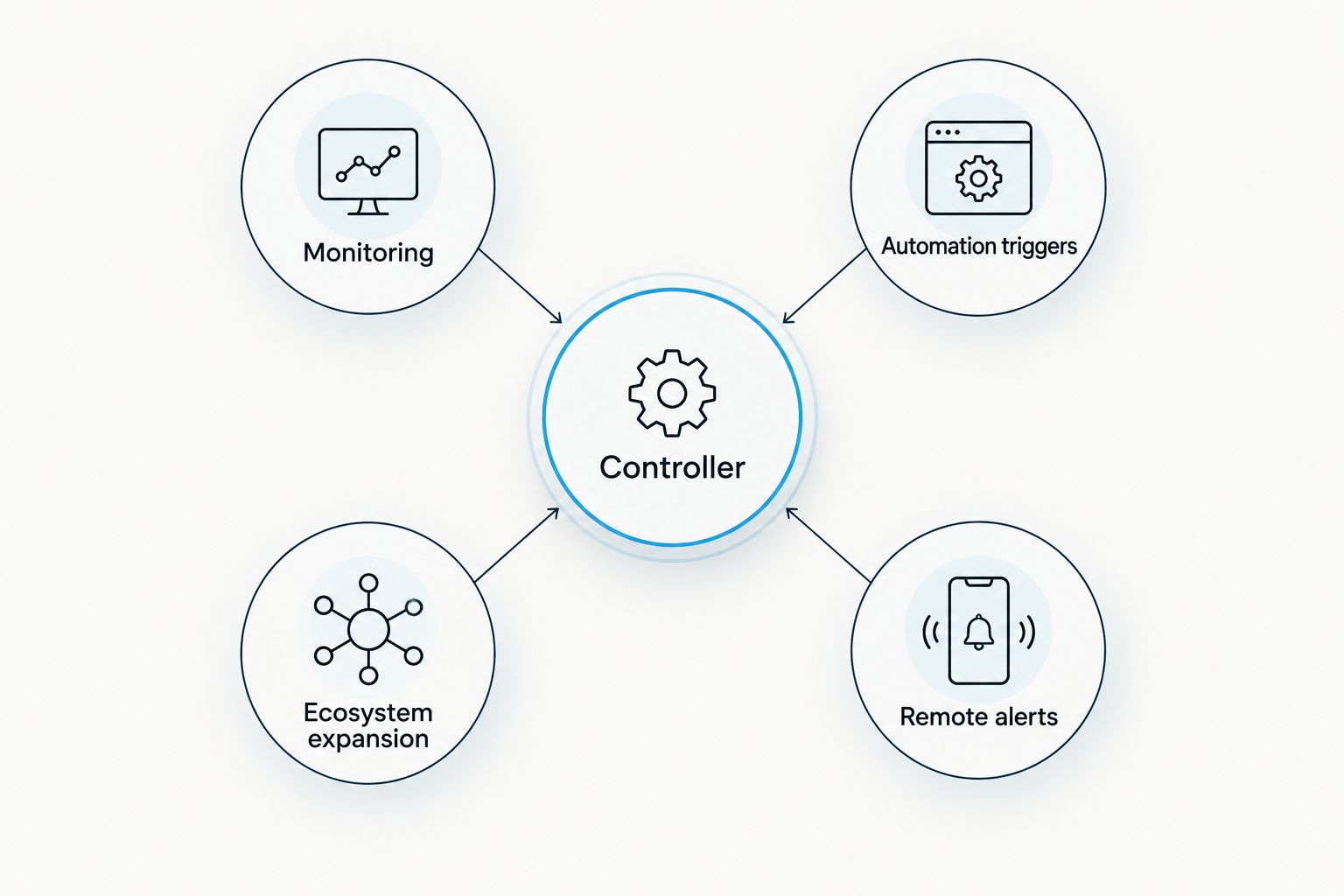
- Monitoring depth — how many probes it reads (temperature, pH, ORP, salinity) versus just switching outlets on a timer
- Automation triggers — whether it can act on a reading (kill a heater, start a top-off, cue a dose) rather than just log it
- Ecosystem expansion — whether return pumps, dosing pumps and testers plug into the same dashboard later
- Remote alerts — a phone notification before a fault becomes a dead tank, not after
- Setup complexity — how long calibration and programming actually take before it's trustworthy
- Scope — single-function control (one light, one heater) versus a full monitoring platform
The five aquarium controllers Krakking Korals ranked below cover every common setup, from a single-light nano tank to a full SPS system running dosing and return pumps together.
Aquarium controllers at a glance
| Controller | Best for | Standout feature | Key limitation |
|---|---|---|---|
| Neptune Systems Apex A3 | Full reef monitoring and automation | Expands to probes, dosing and return pumps on one dashboard | Setup and calibration take real time |
| Kessil Spectral Controller X | Single-light dimming and scheduling | Touchscreen control with no app or WiFi needed | Only works with Kessil fixtures |
| Aqua Medic Temperature Controller | Heater and chiller automation | 0.1°C switching accuracy | No probes beyond temperature |
| ClariSea Smart Controller | Automated fleece roll filtration | Runs ClariSea SK-Series rollers on a timer | Single-purpose, needs a compatible roller |
| Kamoer F4 Pro Doser | Automated dosing without a full ecosystem | 4-channel independent dosing with app scheduling | No temperature or pH probes |
1. Neptune Systems Apex A3: best aquarium controller for full reef monitoring
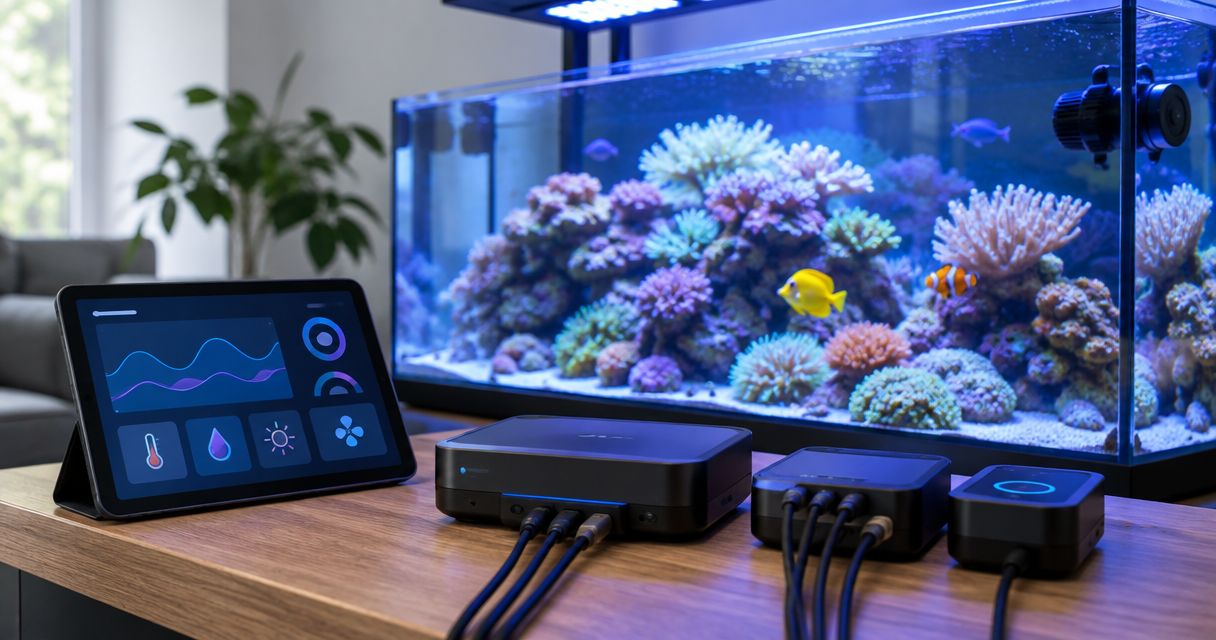
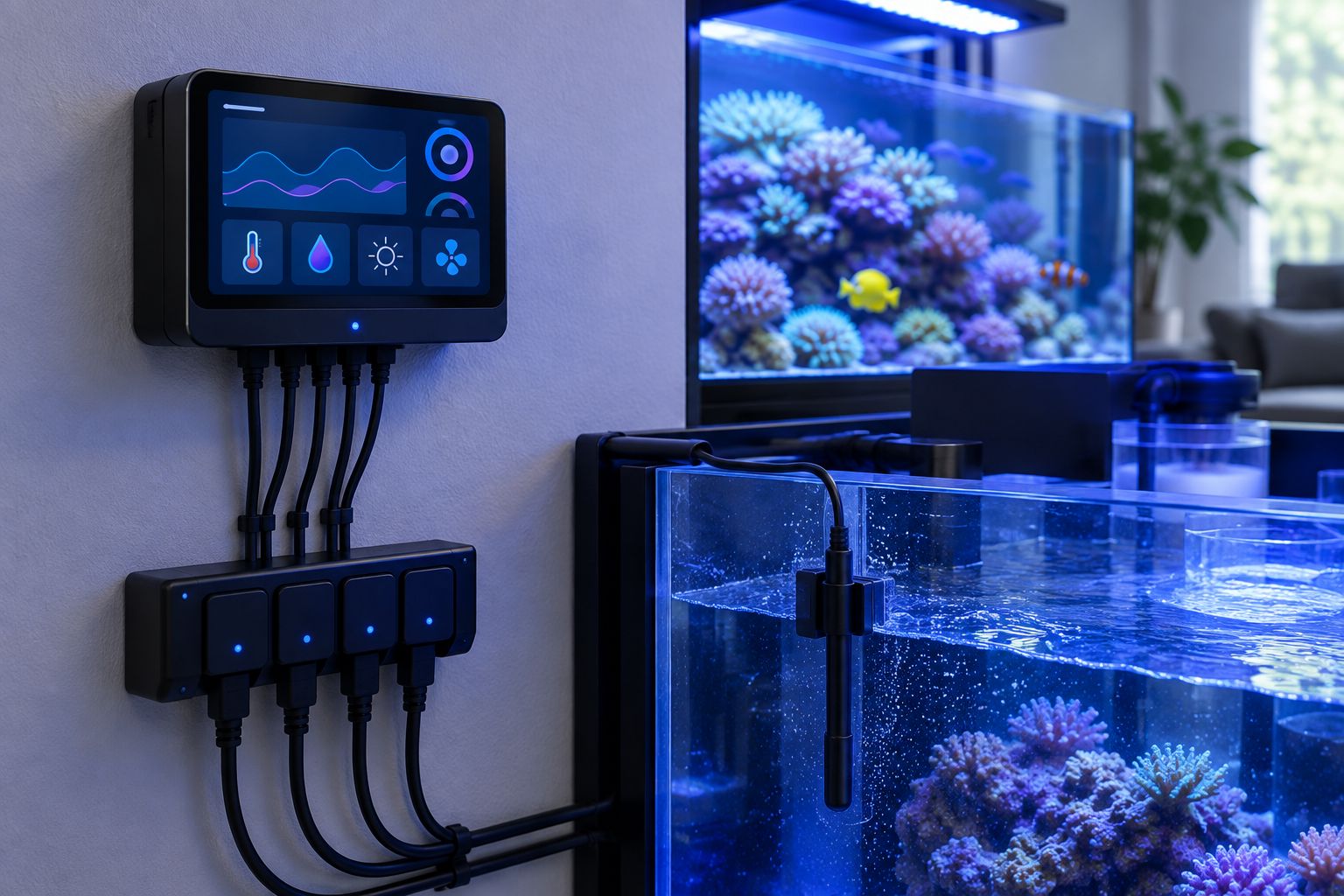
Neptune Systems built the Apex line as a hub, not a single gadget — the base unit reads probes for temperature, pH, ORP and salinity, then switches outlets or Apex modules based on what it sees. Reefers running mixed SPS and LPS systems tend to land here because one dashboard covers heating, lighting cues, dosing and alerts instead of four separate boxes.
Neptune Systems Apex A3 pros:
- Expands to the COR-15 intelligent return pump and dosing modules on the same account
- Phone alerts fire before a stuck heater or failed pump becomes a die-off
- Programmable schedules run heating, lighting cues and feed modes without daily manual input
- Years of firmware updates keep older base units current
Neptune Systems Apex A3 cons:
- Calibrating probes and building automation rules takes a real afternoon, not ten minutes
- Ecosystem modules (return pump, dosing pump, automated tester) are separate purchases on top of the base unit
- Overkill for a single nano tank running one heater and one light
Best for: reefers running SPS, LPS or mixed systems who want every probe and pump reporting to one dashboard.
Verdict: Buy — if your tank runs more than a heater and a light, the Apex A3 pays for the setup time the first time it catches a fault before you do.
2. Kessil Spectral Controller X: best aquarium controller for single-light dimming
The Spectral Controller X is a dedicated touchscreen unit built to run one Kessil LED fixture through sunrise, midday and sunset ramps without a phone app or WiFi network involved.
Kessil Spectral Controller X pros:
- Touchscreen is genuinely usable without a manual
- No app pairing, no WiFi outage taking your lighting schedule down with it
- Manual colour and intensity adjustment on the fly during maintenance
Kessil Spectral Controller X cons:
- Only talks to Kessil fixtures — no cross-brand control
- No probe inputs, so it can't react to temperature or pH
- Doesn't touch dosing or pumps
Best for: single-light tanks where the owner wants proper light scheduling without buying into a bigger platform.
Verdict: Buy for a Kessil-only setup. Skip it if you're mixing light brands or want monitoring beyond the light itself.
3. Aqua Medic Temperature Controller: best aquarium controller for heater and chiller automation
This is a stand-alone dual-channel unit that switches a heater and a chiller (or fan) on independent setpoints, with nothing else plugged into the decision.
Aqua Medic Temperature Controller pros:
- 0.1°C switching accuracy on the touchscreen display
- Works with any brand of heater or chiller on a standard plug
- No app, no account, no firmware to keep updated
Aqua Medic Temperature Controller cons:
- No data logging or history
- No probe expansion for pH, ORP or salinity
- No remote alerts if you're away from the tank
Best for: any tank that just needs reliable heating and cooling control, whether or not anything else is automated.
Verdict: Buy — cheap insurance against a stuck relay, and it doesn't compete with an Apex if you add one later.
4. ClariSea Smart Controller: best aquarium controller for automated fleece roll filtration
The Smart Controller drives a ClariSea fleece roller, advancing fresh filter fleece on a timer or when flow drops as the fleece clogs.
ClariSea Smart Controller pros:
- Keeps mechanical filtration hands-off between fleece changes
- Works across ClariSea's SK-Series roller sizes
- Simple dial-based setup, no app required
ClariSea Smart Controller cons:
- Only useful if you already own a compatible ClariSea roller
- Doesn't monitor temperature, dosing or lighting
- Not a general-purpose reef controller by any measure
Best for: reefers who already run a ClariSea fleece roller and want it rolling itself.
Verdict: Buy only if you own a compatible ClariSea unit — otherwise this isn't the controller you're shopping for.
5. Kamoer F4 Pro Doser: best aquarium controller for automated dosing without a full ecosystem
The Kamoer F4 Pro doser is a standalone 4-channel dosing pump with its own screen and scheduling, running calcium, alkalinity, magnesium and trace elements on independent timers without needing a base controller.
Kamoer F4 Pro Doser pros:
- Four channels cover most two-part-plus-trace dosing routines on their own
- App connectivity lets you adjust schedules remotely
- No base unit or ecosystem buy-in required
Kamoer F4 Pro Doser cons:
- No temperature or pH probes, so dosing runs blind to tank conditions
- No alert if a dosing line runs dry mid-week
- Calibration against your own alkalinity tests still needs manual checking
Best for: reefers who want dosing automated now without committing to a full Apex-style platform.
Verdict: Buy — it's the fastest way to automate dosing in 2026 without a bigger controller purchase.
Krakking Korals stocks all three single-purpose controllers below alongside the Apex ecosystem gear.


“A controller only reports what its probes tell it — recalibrate every few months or the dashboard is lying to you.”
How we ranked
Every controller above got measured against the same six criteria: monitoring depth, automation triggers, ecosystem expansion, remote alerts, setup complexity and scope. Full-platform units like the Apex A3 score high on the first four and lose points on setup time; single-purpose units like the Kessil and Aqua Medic controllers score the opposite way. Neither is wrong — they're built for different tanks.
Which aquarium controller should you choose?
If you only buy one thing, buy the Neptune Systems Apex A3. It's the only option here that grows with the tank — add a dosing pump, a return pump or an automated tester later and it plugs into the same dashboard. For a single Kessil light or a dedicated fleece roller, the matching single-purpose controller (Kessil Spectral Controller X or ClariSea Smart Controller) does the job without paying for capability you'll never use. If dosing is the immediate pain point and you're not ready for a full ecosystem, the Kamoer F4 Pro Doser gets it automated in 2026 without the bigger commitment. Krakking Korals recommends starting with the Apex A3 for any tank past a nano, and stepping down to a single-purpose controller everywhere else.
FAQ
What's the best aquarium controller for a reef tank in 2026?
The Neptune Systems Apex A3 is the best aquarium controller overall in 2026 for tanks running probes, dosing and return pumps together. Krakking Korals lists it alongside single-purpose options like the Kessil Spectral Controller X for smaller setups.
Is a Neptune Apex worth it for a beginner reef tank?
Not usually. A beginner nano tank running one heater and one light gets more value from a stand-alone Aqua Medic Temperature Controller than from a full Apex A3 setup.
Does the Kessil Spectral Controller X work with other LED brands?
No, it only pairs with Kessil fixtures. Mixed-brand lighting setups need separate manufacturer controllers or app control instead of one dedicated unit.
Can I run a temperature controller without a full monitoring platform?
Yes. The Aqua Medic Temperature Controller runs heating and cooling completely on its own, with no probes or dashboard beyond its own temperature sensor.
Is the Kamoer F4 Pro Doser as reliable as an Apex-linked dosing pump?
It handles 4-channel dosing well on independent schedules, but it doesn't read temperature or pH, so dosing runs without feedback on tank conditions the way an Apex-linked pump can get.
Do I need a controller for a small nano reef tank?
Not always. Many nano tanks run fine on a heater thermostat and a light's built-in timer; a dedicated controller earns its place once you add dosing, a chiller or more than one automated function.
What's the difference between a controller and a dosing pump?
A controller reads conditions and switches equipment; a dosing pump like the Kamoer F4 Pro adds specific chemicals on a schedule. Some dosing pumps run standalone, others plug into a bigger controller like the Apex A3.
How long does it take to set up a full reef controller?
Expect a real afternoon for probe calibration and automation rules on a unit like the Apex A3, versus minutes for a single-purpose controller like the Kessil Spectral Controller X or ClariSea Smart Controller.
One last thing
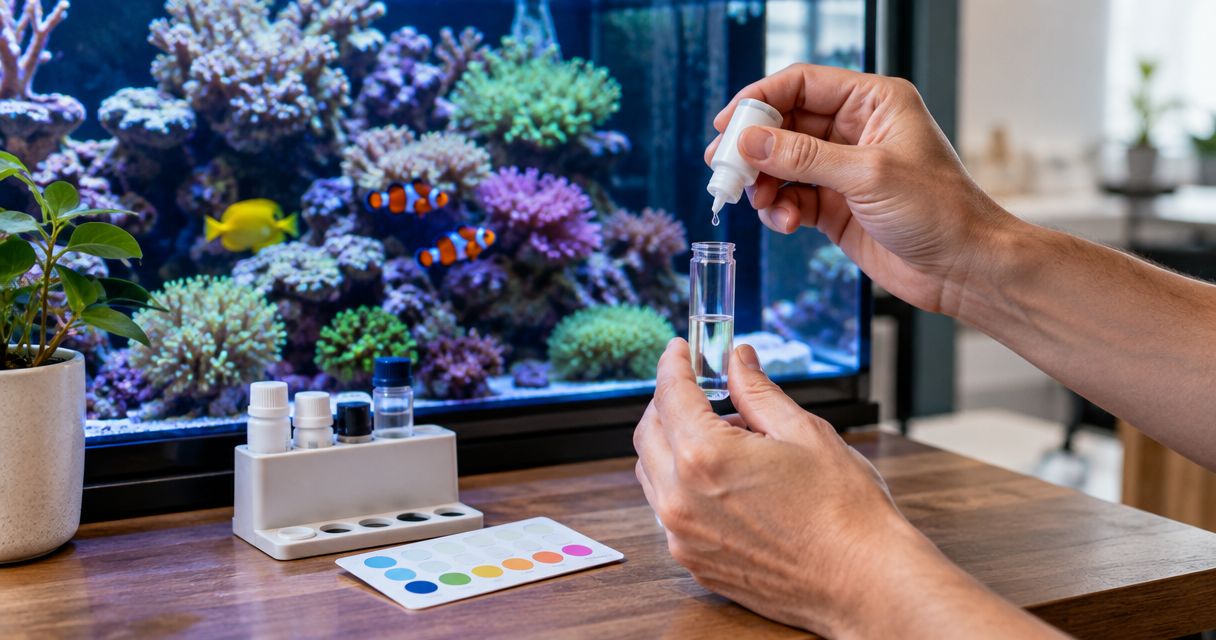
The most skipped step with any aquarium controller isn't the wiring — it's recalibrating probes. A pH or ORP probe drifts over months, and a controller with a live dashboard still reports garbage numbers off a probe that hasn't been checked against a reference solution since setup. Put a recurring reminder in for probe calibration, not just water changes.