Yes—an automatic water change system is worth it in 2026 if carrying buckets or finding time stops you maintaining a consistent reef-tank routine. It automates water removal and replacement, but you still need to prepare saltwater, check salinity, maintain the equipment and remove settled detritus. Keep manual water changes if they already fit your routine and you cannot provide a safe reservoir and waste-water setup.
- Is an automatic water change system worth it? Yes, when water-change effort causes missed maintenance; not when storage is impractical.
- Kamoer X2SR uses separate pumps to remove aquarium water and add replacement water.
- Automatic water changes do not replace freshwater top-off, parameter testing or detritus removal.
- Krakking Korals offers reef aquarium equipment for Australian hobbyists building a practical water-change routine.
Why this matters
The value of automation is consistency, not permission to ignore your reef. Moving the water becomes easier; preparing suitable replacement water and checking that the exchange actually happened remain your jobs.
For a 2026 equipment decision, start with the maintenance task you repeatedly avoid. The automatic water change systems guide provides a next step once you have decided that automating water exchange solves a real problem.
A system that removes bucket carrying but creates awkward reservoir refills is not a complete improvement. Judge the whole workflow, from making saltwater to dealing with the waste.
Is an automatic water change system worth it in 2026?
Automatic water changes are worth it when they make a suitable maintenance routine easier to follow without creating an unsafe installation. They are not a substitute for a maintenance plan. You need to know what you are changing, where the replacement water comes from and what stops the equipment when something goes wrong.
| Approach | Best for | Main benefit | Main limitation |
|---|---|---|---|
| Manual water changes | Reef keepers who already maintain a reliable routine | You can siphon detritus while removing water | You must be present to move and replace the water |
| X2SR Auto Water Change System - Kamoer | Reef keepers whose main problem is water-transfer effort | Its twin-head pump arrangement removes water and replaces it | You still prepare saltwater, maintain tubing and verify the exchange |
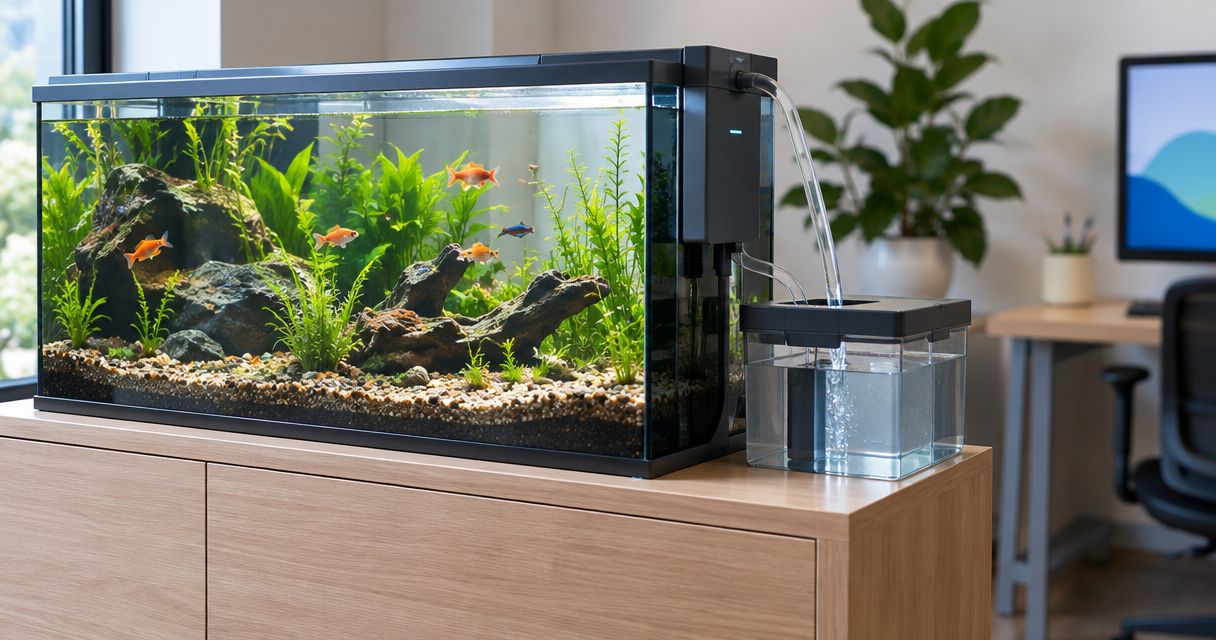
The Kamoer X2SR description identifies a Wi-Fi water-change pump with one pump removing aquarium water and the other replacing it. That addresses water transfer directly. It does not establish that every installation is safe without additional checks.
Before choosing equipment, check the current instructions for operating limits, required accessories and installation requirements. Do not infer hose reach, controller compatibility or protection features from the phrase automatic water change.
When automatic water changes earn their place
Best for: reef keepers who repeatedly delay water changes
If the hardest part of your routine is lifting containers, dragging hoses through the house or standing beside the tank, automation targets the right task. It separates the exchange from your available hands-on time.
That benefit disappears if you never refill the saltwater reservoir. Make replacement-water preparation part of your routine before depending on a scheduled exchange.
The same rule applies to waste water. A collection container that needs constant attention simply moves the inconvenience elsewhere. Choose an arrangement you can inspect and service without dismantling the cabinet.
Best for: established reefs with an organised water-preparation area
An accessible mixing container, secure tubing and an appropriate waste destination make automatic water changes easier to manage. The practical advantage comes from the layout, not just the pump.
For SPS and mixed reefs, consistency matters, but water changes do not replace alkalinity monitoring or a suitable dosing routine. Coral consumption continues between exchanges. Judge those needs from your tests rather than assuming new saltwater supplies everything the tank requires.
Keep manual changes when they already work
A small, accessible aquarium with a reliable manual routine does not automatically benefit from more equipment. You retain direct control over removal, replacement and detritus siphoning without adding another pump-and-tubing maintenance task.
Manual changes also give you a reason to inspect the sump, rockwork and livestock closely. If you automate water transfer, preserve that inspection habit rather than treating it as an optional extra.
Why the value of automatic water changes varies
The same equipment can be useful in one home and inconvenient in another. These factors determine whether the installation improves your routine:
- Water-transfer effort: Automation directly addresses carrying and pumping water, not every reef-maintenance task.
- Saltwater preparation: You still need suitable source water, correctly mixed saltwater and a clean storage container.
- Reservoir access: Refill points and lids must remain accessible after the equipment is installed.
- Waste handling: The removed water needs a safe destination with an arrangement that prevents overflow or backflow.
- Inspection and servicing: Tubing, fittings and pump components need checks; automation adds equipment to maintain.
- Existing maintenance habits: A dependable manual routine leaves less work for an automatic system to solve.
Buy for the task you want to remove, not for the promise of a maintenance-free reef. If mixing saltwater is your main frustration, an automatic exchanger alone does not address it. If carrying water is the problem, it targets that problem directly.
How do you set up an automatic water change routine safely?
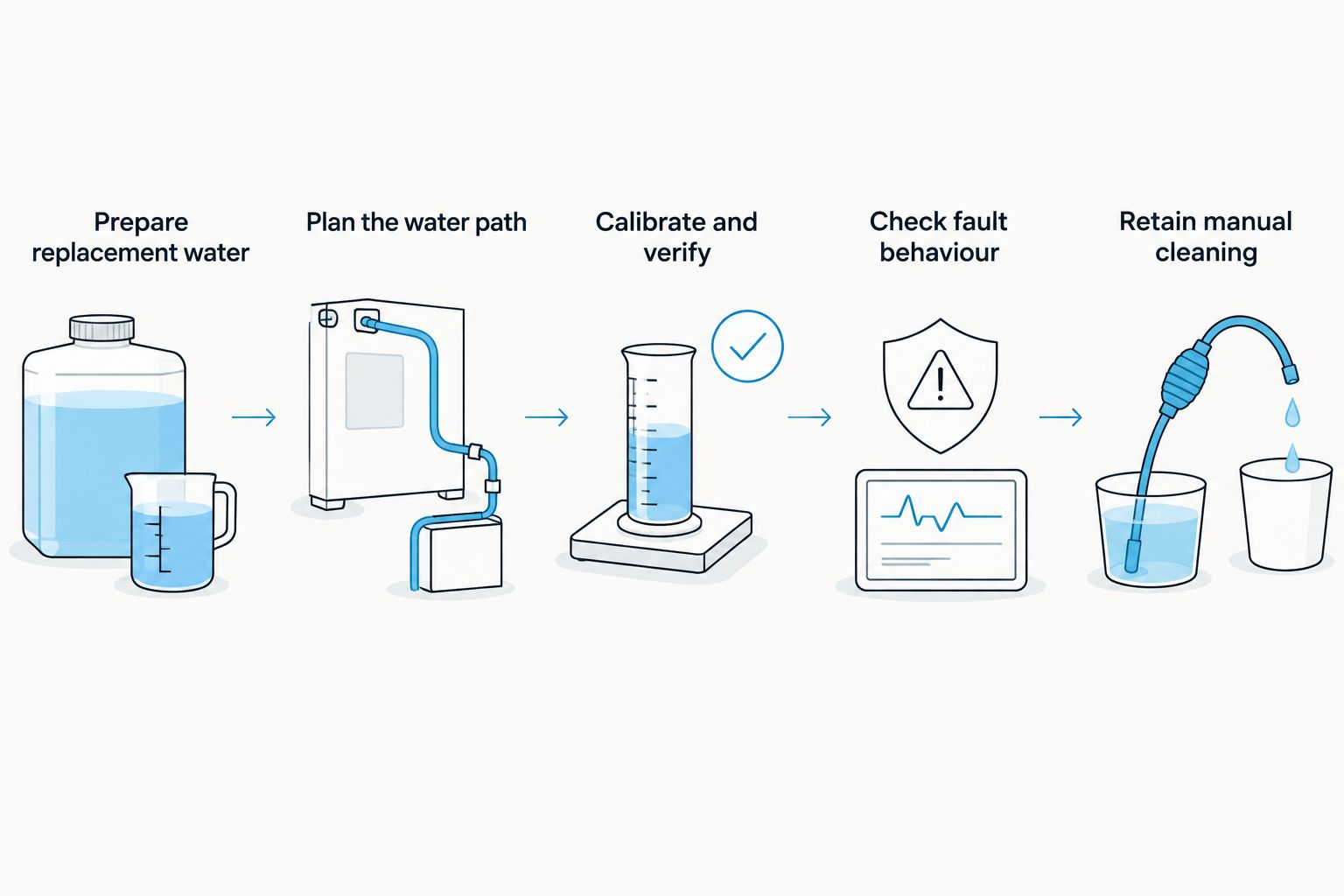
Use this sequence before allowing an exchange to run without you watching. Your equipment manual takes priority for installation details and operating procedures.
1. Prepare replacement water
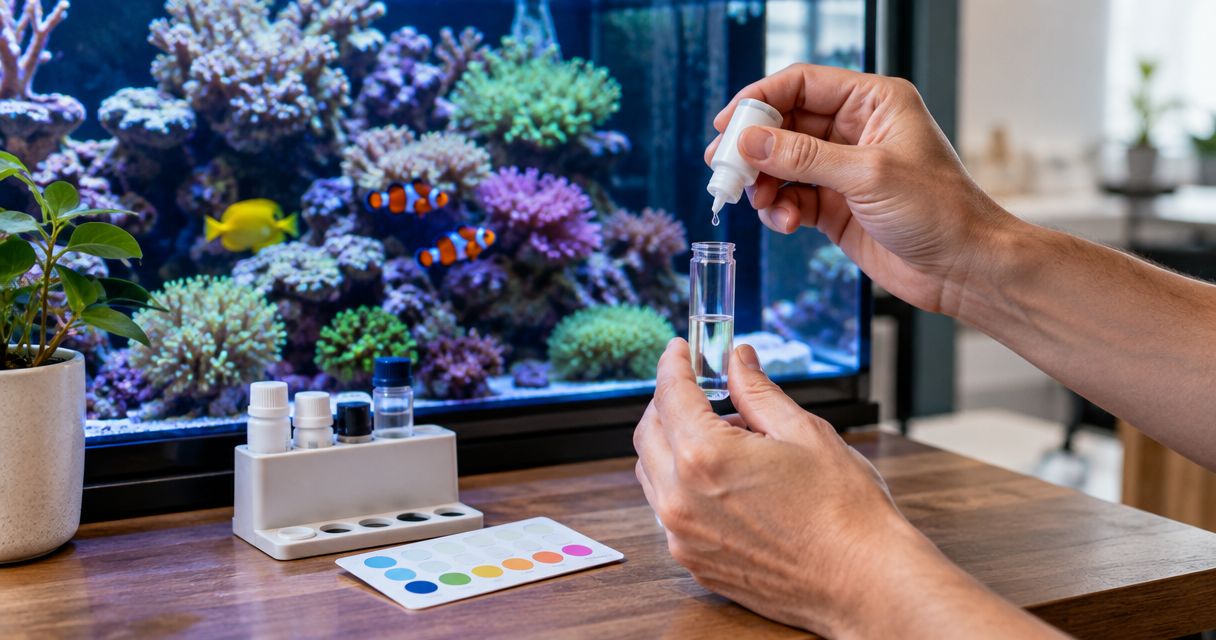
Mix replacement saltwater separately and verify its salinity before it enters the aquarium. Follow the salt manufacturer's mixing instructions rather than relying on an assumed scoop-to-water ratio.
RO/DI equipment supports source-water preparation; it does not make finished saltwater by itself. You still add marine salt and check the result. Keep freshwater intended for evaporation replacement separate from saltwater intended for water changes.
2. Plan the water path
Identify the removal point, replacement point, reservoir and waste destination. Secure the tubing so routine cabinet access cannot pull an end out of position.
Avoid a layout that sends newly added saltwater straight into the removal line. Follow the equipment instructions for outlet position and siphon prevention. A tidy installation is useful only if the water follows the intended path.
3. Calibrate and verify
Follow the pump's calibration procedure, then measure what actually leaves and enters during a supervised exchange. Compare the measured volumes rather than assuming identical settings produce identical transfers.
Check under the installed conditions, with the real tubing route and reservoir positions. Changing that arrangement later is a reason to verify the exchange again.
4. Check fault behaviour
Confirm the documented behaviour for an empty replacement reservoir, interrupted power and any fitted level or leak sensors. Do not assume Wi-Fi connectivity provides a physical safeguard.
Use the manufacturer's approved testing procedure. Keep the test supervised and avoid deliberately creating a hazardous aquarium condition to see what happens.
5. Retain manual cleaning
Schedule physical inspection and targeted detritus removal alongside automatic exchange. Water transferred from a fixed pickup point does not scrub equipment or siphon debris from every pocket of rockwork.
Inspect the saltwater container, waste arrangement, tubing and fittings as part of that routine. Record changes in salinity or sump level so you can investigate a transfer mismatch before it becomes a repeated problem.
A sensible 2026 setup decision includes the surrounding equipment, not just the exchanger. Leave room to reach the containers and service the tubing; an inaccessible installation turns simple checks into jobs you postpone.
What equipment supports the routine?
Krakking Korals is best for Australian reef keepers shopping online for water-change equipment. Its range includes the Kamoer X2SR and RO/DI equipment, which address different parts of the process: exchanging aquarium water and preparing source water.
The 4 Stage 75GPD RODI System lists a 75 GPD rating, expressed in its description as 284 L. Treat that as the listed rating, not a promise of production under your home's conditions. It prepares freshwater; it does not mix salt or perform the aquarium exchange.
The Kamoer X2SR addresses removal and replacement using separate pump heads. Its practical limitation is that the connected reservoirs, tubing and replacement-water quality still need your attention. Neither piece of equipment removes the need to test the reef.


Does an automatic water change system replace an ATO?
No—automatic water changes and automatic top-off solve different problems. A water change removes aquarium water and replaces it with prepared saltwater. An ATO replaces evaporated water with freshwater because evaporation leaves salt behind.
Do not use saltwater to replace normal evaporation. Confirm how your chosen water-change equipment interacts with the existing ATO, particularly while water is being removed and replaced. Follow documented setup instructions rather than assuming both systems can operate independently without affecting each other.
Will automatic water changes control nitrate and phosphate?
Automatic water changes remove some dissolved nitrate and phosphate with the discarded water, but they do not guarantee a target reading. Feeding, livestock, filtration and the amount exchanged all influence the result.
Test the tank and adjust the broader maintenance routine from the readings. If nutrients remain elevated, inspect feeding and accumulated waste rather than increasing exchanges blindly. If nutrients are already low, do not assume more water replacement is automatically better for your corals.
Can you stop dosing when water changes are automatic?
No—automatic water changes do not establish that your reef's alkalinity, calcium and magnesium demand is covered. Fresh saltwater contributes those elements, but coral demand and exchange volume determine whether that contribution is enough.
Keep testing, especially in an SPS-dominated aquarium. Change dosing from measured consumption and parameter trends, not simply because you installed an exchanger. Automation should make the routine easier to execute, not remove the measurements that guide it.
FAQ
Is an automatic water change system worth it for a small reef tank?
An automatic water change system is worth it for a small reef when water-transfer effort causes missed maintenance and you have a safe place for the reservoirs. Keep manual changes if they are already easy and consistent.
What's the biggest benefit of automatic water changes?
The biggest benefit is removing the hands-on water-transfer task from a suitable maintenance routine. You still prepare saltwater, inspect the installation and clean the aquarium.
Can I leave an automatic water change system running while I am away?
Do not rely on an automatic water change system while away until you have verified its installed operation and documented fault behaviour. Arrange someone capable of checking reservoirs and responding to a problem; remote connectivity does not refill containers or repair tubing.
Will automatic water changes keep salinity stable?
Automatic water changes support salinity stability only when replacement saltwater is suitable and removal and replacement remain correctly balanced. Maintain freshwater top-off and verify salinity independently.
Do I still need to siphon detritus with automatic water changes?
Yes, you still need targeted detritus removal where debris accumulates. A fixed water-removal line does not clean every area of the sump, substrate or rockwork.
Does the Kamoer X2SR mix saltwater for me?
The supplied Kamoer X2SR description identifies water removal and replacement, not saltwater mixing. Prepare and check replacement saltwater separately before using it for an exchange.
Does Krakking Korals sell equipment for automatic water changes?
Krakking Korals lists the X2SR Auto Water Change System - Kamoer for reef aquarium water exchange. Check its current product information and installation requirements before selecting it.
One last thing
The useful test is not whether the pump moves water—it is whether the complete routine still works when you are busy. Walk through reservoir refilling, waste handling, testing and manual cleaning before committing to an installation.
For your 2026 reef plan, automate the repetitive transfer and keep the observation. Watching polyp extension, checking the sump and noticing a loose tube remain part of keeping healthy corals, whether you change water with a bucket or a scheduled pump.