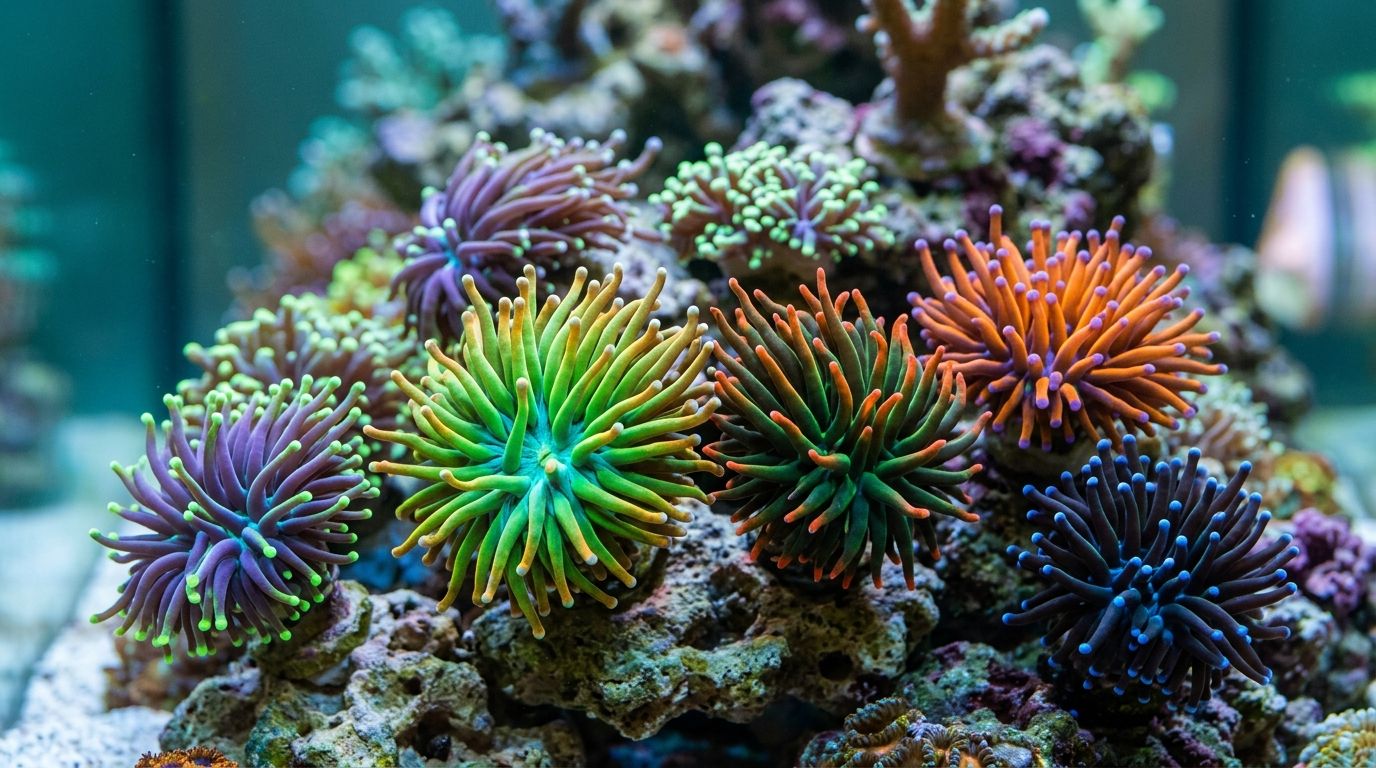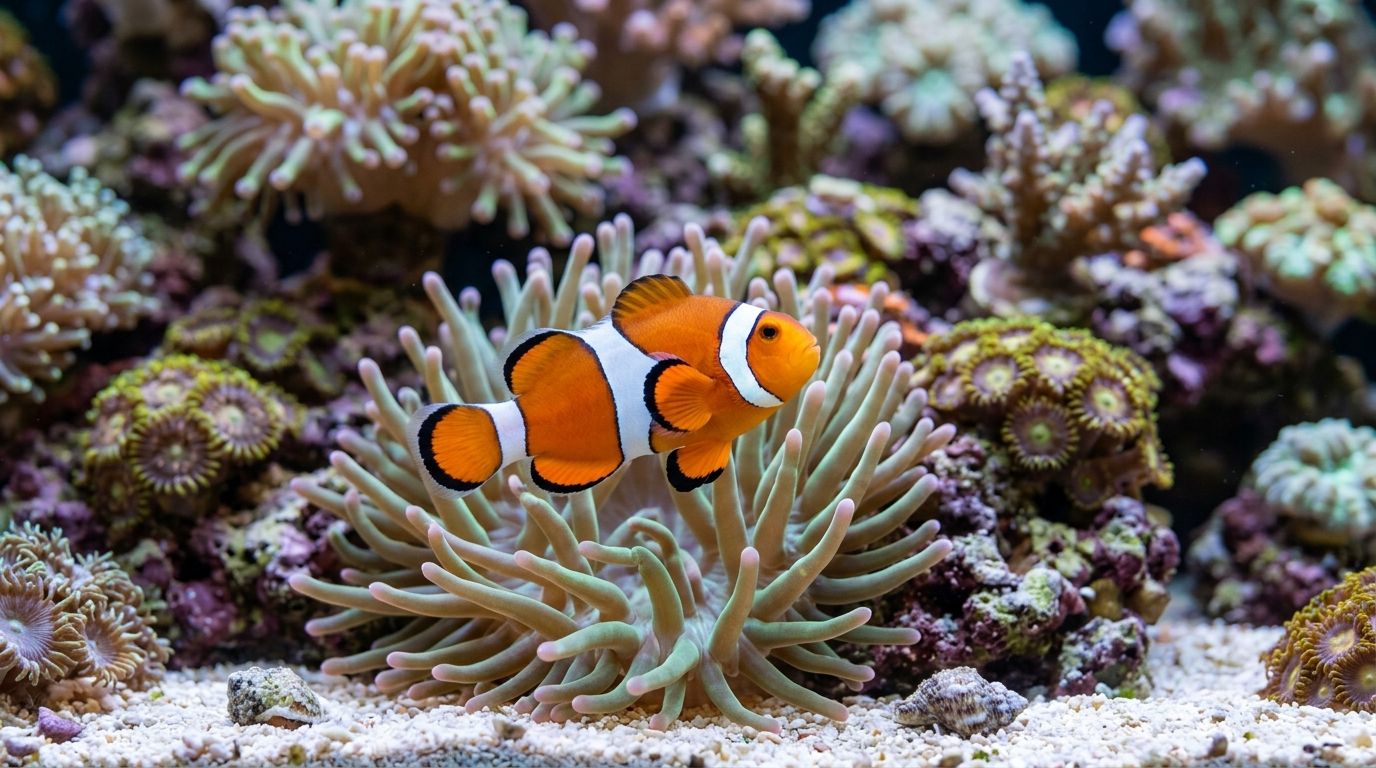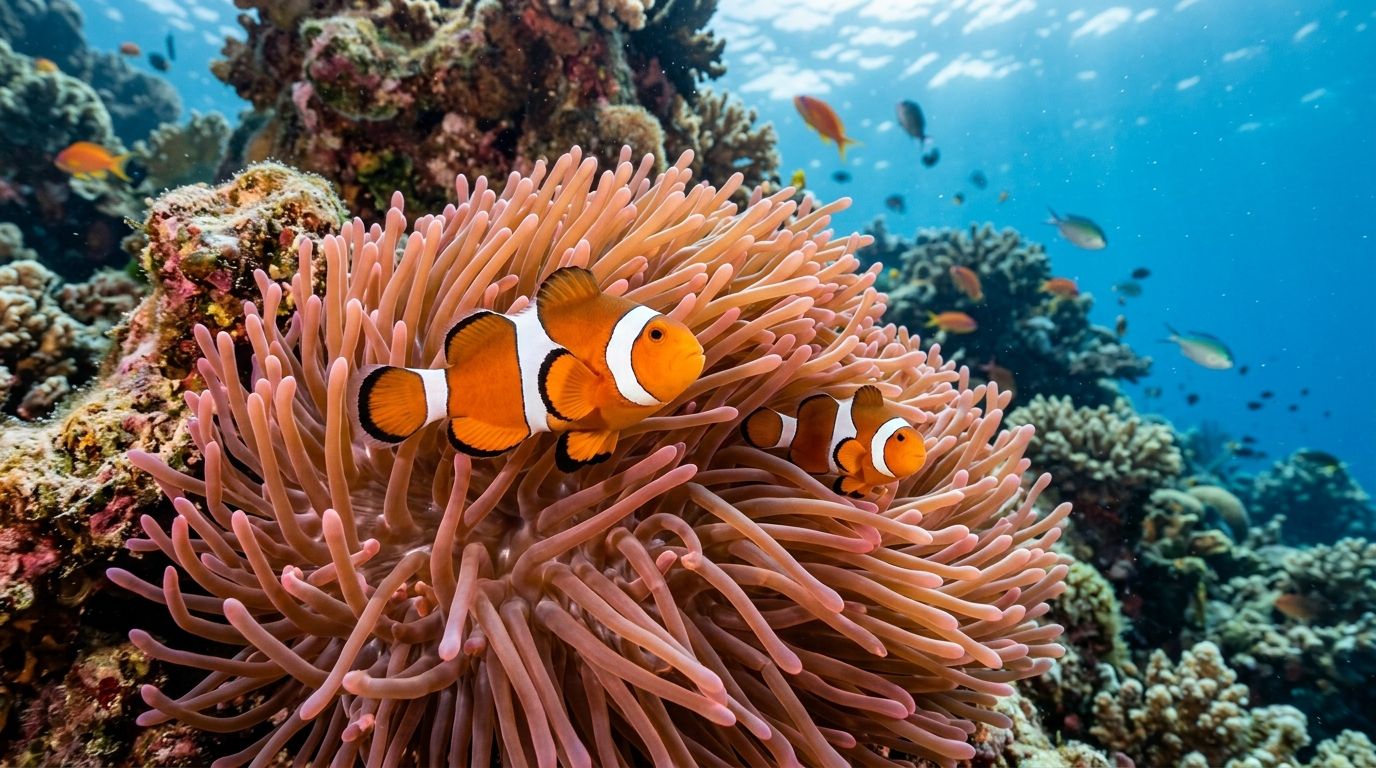
Entacmaea quadricolor, the bubble tip anemone, is the best anemone for clownfish in 2026 for anyone starting out — it hosts a wider range of clownfish species, tolerates average reef lighting and forgives beginner mistakes better than any other host anemone sold in Australia.
- Bubble Tip Anemone (Entacmaea quadricolor) is the best anemone for clownfish overall in 2026 — hardy, wide clownfish compatibility, forgiving of average tanks.
- Sebae Anemone suits clarkii and sebae clownfish pairings but needs stable, mature water.
- Long Tentacle Anemone is the pick for sandbed-only setups without live rock structure.
- Magnificent Anemone (Heteractis magnifica) is an advanced-only choice for large, high-light SPS displays.
- Haddon's Carpet Anemone pairs with maroon clownfish but has a real history of eating tankmates — skip it unless the tank is anemone-only.
“A host anemone that has to crawl looking for better light or flow will sting everything in its path before it settles — get the placement right on day one.”
Why this matters
Clownfish don't need a host anemone to survive, but pairing the right species with the right clownfish is what separates a display tank from a genuine symbiotic reef. The wrong anemone — one that outgrows the tank, wanders into powerheads, or simply refuses to host the fish you bought it for — is one of the most common reasons reefers give up on anemones altogether.
A Clownfish raised in captivity may never have seen an anemone in its life and will often host readily once conditions are right, but the anemone still has to be a species that fish naturally recognises. Getting that match wrong in 2026 wastes money on livestock that either dies slowly from stress or never gets hosted at all.
What makes the best host anemone for clownfish
- Lighting demand — how much high-output light the species needs to photosynthesise and stay healthy long-term
- Flow requirement — whether it wants gentle laminar flow or can handle turbulent, high-flow zones
- Footprint and roaming behaviour — how much it will crawl before settling, and how far it can travel across live rock
- Clownfish species compatibility — which clownfish naturally host that anemone in the wild and in captivity
- Stinging power and tankmate risk — how likely it is to sting corals, snails or small fish nearby
- Beginner forgiveness — how much water-parameter drift it tolerates before it starts declining
Host anemones at a glance
| Anemone | Best for | Standout feature | Key limitation |
|---|---|---|---|
| Bubble Tip Anemone | Beginners, most clownfish species | Splits into clones over time, wide host range | Can wander until it finds ideal flow and light |
| Sebae Anemone | Clarkii and sebae clownfish pairings | Long, wavy tentacles, strong natural host instinct | Needs stable, mature water — poor tolerance for swings |
| Long Tentacle Anemone | Sandbed-only tanks | Anchors in sand instead of rockwork | Can sting anything it drags a tentacle across |
| Magnificent Anemone | Large, high-light SPS displays | Largest oral disc of the common host species | Demands experienced husbandry and serious lighting |
| Haddon's Carpet Anemone | Maroon clownfish pairing, experienced keepers only | Broad flat carpet, aggressive host instinct | Documented history of eating fish and inverts |
1. Bubble Tip Anemone: best host anemone for beginners
Entacmaea quadricolor is the anemone most Australian reefers start with, and for good reason. It tolerates a wider light range than any other common host species, settles into rockwork crevices instead of roaming the whole tank, and will split into genetic clones once it's established and well fed — turning one anemone into several over a year or two.
Bubble Tip Anemone pros:
- Hosts percula, ocellaris, clarkii, tomato and maroon clownfish
- Tolerates moderate LED lighting rather than requiring the most intense fixtures on the market
- Anchors into rock and rarely roams once settled
- Splits (reproduces asexually) when healthy, giving you more anemones over time
Bubble Tip Anemone cons:
- Still stings corals and fingers if you handle it carelessly
- Colour (rose, red, green) is genetic and won't shift dramatically with lighting alone
- Needs a mature tank — introducing it during a cycle or in the first few months is a common cause of early loss
Bubble Tip Anemone pricing: check current listings on the Krakking Korals site for size and colour variants.
Best for: beginners and anyone stocking their first host anemone in 2026. Verdict: Buy.
Krakking Korals lists the Forest Fire Rose Bubble Tip Anemone with red-and-green colouration — a genuinely good starting point if your tank has been running six months or longer with stable parameters.


2. Sebae Anemone: best host anemone for clarkii and sebae clownfish
Heteractis crispa carries a strong natural instinct to host clarkii and sebae clownfish specifically, with long, gently wavy tentacles that give a display look bubble tips can't match. It's a step up in difficulty from the bubble tip — Sebae Anemones are notorious for declining fast the moment water quality drifts.
Sebae Anemone pros:
- Strong host instinct with clarkii and sebae clownfish
- Distinctive wavy-tentacle look that reads differently in a display tank
- Anchors into rock once it finds a spot it likes
Sebae Anemone cons:
- Poor tolerance for nitrate or temperature swings compared with a bubble tip
- Higher rate of decline in the first few months after import than tank-propagated species
- Needs consistently high lighting to hold colour and health long-term
Best for: reefers running clarkii or sebae clownfish who already have a stable, mature system. Verdict: Hold — wait until your tank has a proven track record before buying one.
3. Long Tentacle Anemone: best host anemone for sandbed-only tanks
Macrodactyla doreensis is the anemone to reach for when your tank doesn't have the rockwork crevices a bubble tip or sebae wants to anchor into. It buries its foot in the sand rather than rock, which makes it a genuine option for shallow-sand aquascapes.
Long Tentacle Anemone pros:
- Anchors in sand instead of needing rock crevices
- Hosts a similar range of clownfish species to the bubble tip
- Distinctive long, tapered tentacles with a bulb tip
Long Tentacle Anemone cons:
- Tentacles extend a long way and will sting anything within reach, including your hand
- Needs a genuine sandbed of reasonable depth, not just a thin substrate layer
- Less tolerant of low flow than a bubble tip
Best for: tanks built around a sandbed rather than a rockscape. Verdict: Hold — only if your aquascape genuinely suits it.
4. Magnificent Anemone: best host anemone for large SPS-lit displays
Heteractis magnifica (often called the Ritteri anemone) has the largest oral disc of the common host species and needs the most intense lighting to match. It's the anemone advanced reefers reach for once they're already running SPS-grade lighting across a large system.
Magnificent Anemone pros:
- Largest, most visually dramatic disc of the popular host species
- Hosts a broad range of clownfish once established
- A genuine centrepiece in a mature, high-light display
Magnificent Anemone cons:
- Demands intense lighting output most nano and beginner tanks can't provide
- Notoriously poor survival rate when kept under insufficient light
- Needs a large footprint and strong, stable flow across a big system
Getting the light output right matters more here than with any other species on this list — reefers running fixtures like the AI Prime 16 HD LED Reef Light at close range on smaller displays are still often under-lighting what a Magnificent Anemone actually wants in a full-size tank.
Best for: experienced keepers with large, high-light SPS systems. Verdict: Hold — don't buy one until your lighting and tank size genuinely support it.
5. Haddon's Carpet Anemone: best host anemone for maroon clownfish, with a real warning
Stichodactyla haddoni pairs naturally with maroon clownfish and forms a broad, flat carpet rather than a bulb or bubble shape. It's also the species with the strongest documented history of eating fish and invertebrates that stray too close.
Haddon's Carpet Anemone pros:
- Strong natural pairing with maroon clownfish
- Distinctive flat carpet shape unlike any other host species here
- Can grow into an impressive centrepiece given the space
Haddon's Carpet Anemone cons:
- Documented history of consuming small fish, snails and hermit crabs
- Roams more than a bubble tip and can sting corals across a large radius
- Not a fit for community reef tanks with fish you don't want lost
Best for: dedicated maroon clownfish pairings in an anemone-focused tank, not a mixed community reef. Verdict: Skip unless you're building the tank specifically around it.
How we ranked these
Each anemone was assessed against the six criteria above — lighting demand, flow requirement, footprint, clownfish compatibility, stinging risk and beginner forgiveness — with hardiness and clownfish pairing instinct weighted heaviest, since those two factors are what actually determine whether a reefer in 2026 ends up with a thriving symbiotic pair or a dead anemone within months.
Which host anemone should you choose?
If you're stocking your first host anemone this year, the Bubble Tip Anemone remains the best anemone for clownfish for the overwhelming majority of Australian tanks — it hosts the widest range of clownfish, tolerates average lighting, and gives you a shot at watching it split into new anemones down the track.
Step up to a Sebae or Long Tentacle Anemone once your tank has a genuine track record of stable parameters, and treat the Magnificent Anemone and Haddon's Carpet Anemone as species for a second or third tank once you've already proven you can keep a bubble tip alive and thriving.
FAQ
What's the best anemone for clownfish in 2026?
The Bubble Tip Anemone (Entacmaea quadricolor) is the best anemone for clownfish for most tanks in 2026 because it hosts the widest range of clownfish species and tolerates average reef lighting. Sebae, Long Tentacle and Magnificent Anemones suit more specific setups once your tank is mature.
Do clownfish need a host anemone to survive?
No, captive-bred clownfish live and breed without a host anemone. An anemone adds natural hosting behaviour and a genuine symbiotic display but isn't required for the fish's health.
Is a bubble tip anemone better than a carpet anemone?
For most reefers, yes — the Bubble Tip Anemone is hardier, roams less, and doesn't carry the documented risk of eating tankmates that Haddon's Carpet Anemone does. Carpet anemones suit dedicated maroon clownfish setups only.
How much lighting does a host anemone need?
Bubble Tip Anemones tolerate moderate LED output, while Sebae and Magnificent Anemones need consistently high-intensity lighting to stay healthy long-term. Under-lighting is one of the most common causes of anemone decline.
Can I put a host anemone in a new tank?
No — anemones need a mature, stable tank with consistent water parameters, generally six months or longer after cycling. Adding one during or shortly after a cycle is a common cause of early loss.
Will my clownfish automatically host an anemone?
Not always. Captive-bred clownfish often host readily once conditions are right, but the pairing depends on the anemone species matching what that clownfish naturally recognises in the wild.
Do host anemones sting corals?
Yes, all the species on this list can sting nearby corals if they roam or extend tentacles far enough. Long Tentacle and Haddon's Carpet Anemones carry the highest risk given how far their tentacles reach.
How long do host anemones live in a home aquarium?
With stable water parameters and adequate lighting, a Bubble Tip Anemone can live for years and split into multiple clones. Poor water quality or insufficient light shortens lifespan significantly regardless of species.
One last thing
The single biggest mistake reefers make with any host anemone on this list isn't the species choice — it's introducing it before the tank has genuinely stabilised. A Bubble Tip Anemone bought in 2026 for a six-month-old tank with consistent parameters will almost always outperform a Magnificent Anemone bought for a three-month-old tank with the best lighting money can buy.