Soft corals forgive beginner mistakes that would wipe out an SPS colony overnight, but not every soft coral in the trade is actually easy — this list ranks the six best soft corals for beginner reef tanks in 2026 by light tolerance, flow needs, and how much neglect they absorb before they start receding.
- Best soft corals for beginners in 2026: Zoanthids top the list for light and flow tolerance.
- Best for fast tank coverage: Green Star Polyps, though they overrun slower-growing neighbours if left unchecked.
- Best for low-light or nano tanks: mushroom corals, among the most forgiving soft corals sold.
- Firework Clove Polyps add colour under moderate flow and are in stock now at Krakking Korals.
- Hold off on leather corals until lighting and dosing are dialled in — they punish neglect slowly, then all at once.
Why this matters
Most new reefers lose their first frag not because soft corals are hard, but because they picked the wrong soft coral for their setup. A toadstool leather bought for a 40-litre nano will sulk under weak flow; a zoanthid colony dropped straight under a 200 PAR LED will bleach in a week.
Matching the coral to the tank — not just buying whatever looks bright in the display tank — is the entire skill in 2026's beginner reef hobby. Browse Krakking Korals' live coral range before you buy and check what your lighting and flow can actually support.
What makes the best soft coral for beginners
- Light tolerance — thrives under a wide PAR range instead of demanding precise LED tuning
- Flow requirements — accepts low-to-moderate flow rather than needing laminar high flow
- Growth rate and spread risk — grows fast enough to reward you, slow enough not to smother neighbours
- Sting potential — low aggression toward corals placed nearby
- Parameter forgiveness — survives normal swings in nitrate, alkalinity and salinity during your first year
- Propagation ease — frags cleanly if you want to trade or expand later
At a glance
| Coral | Best for | Standout feature | Key limitation |
|---|---|---|---|
| Zoanthids | Overall beginner pick | Wide light and flow tolerance | Palytoxin risk when handling |
| Green Star Polyps | Fast tank coverage | Spreads across rock and glass quickly | Can overgrow slower corals |
| Mushroom corals | Low-light or nano tanks | Thrives under modest LED output | Slow to colour up in bright light |
| Kenya Tree Coral | Movement and beginner flow tuning | Sways constantly, shedding waste naturally | Sheds skin periodically, looks unwell briefly |
| Firework Clove Polyps | Moderate-flow colour | Bright polyps under normal reef flow | Retracts fully when stressed |
| Leather corals | Centrepiece in an established tank | Very hardy once settled | Slow to acclimate, sensitive during shipping |
1. Zoanthids: best soft coral for beginners overall
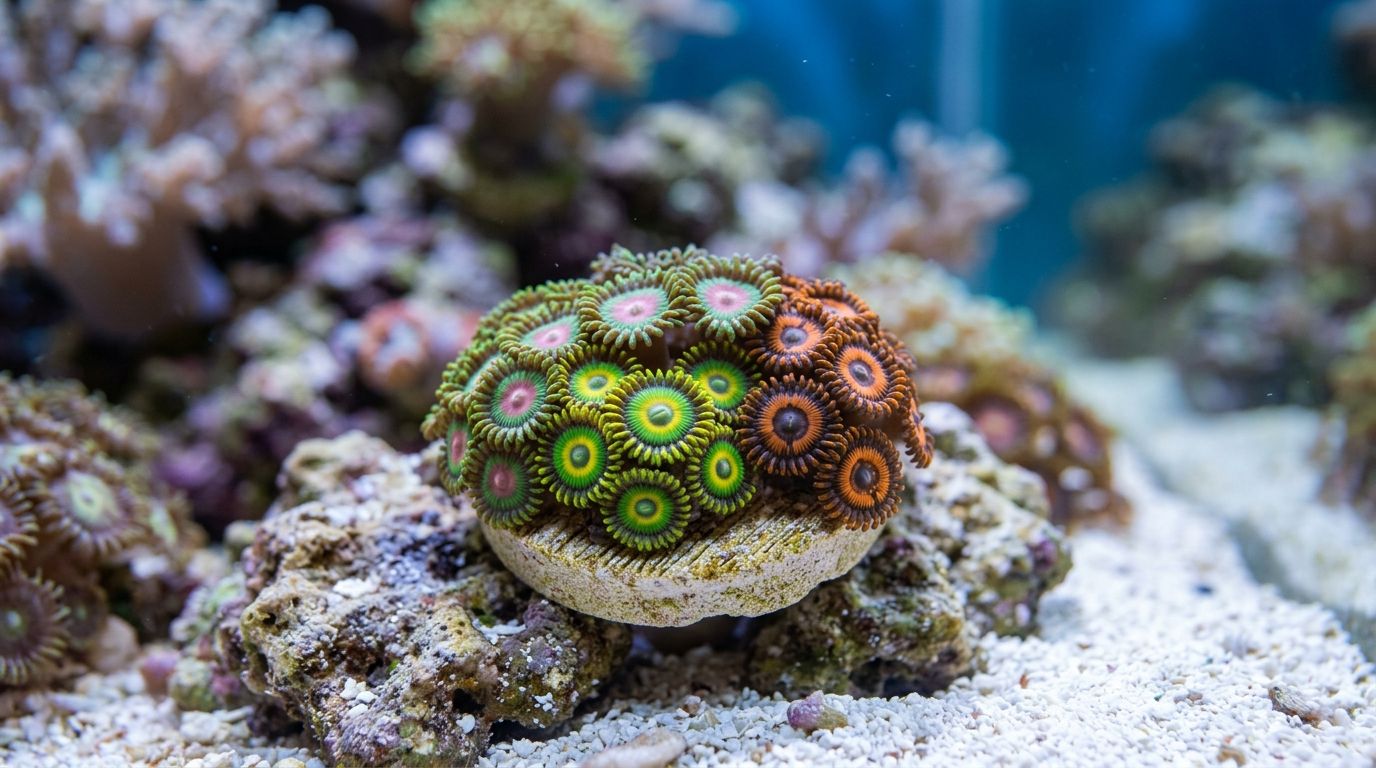
Zoanthids and Palythoa colonies handle the swings a first-year tank throws at them — nitrate spikes, PAR changes, the odd missed dose — better than almost anything else in the trade. Colour range runs from muted browns to neon rainbow morphs, and a single healthy polyp mat spreads across rock steadily without choking out neighbours.
Zoanthid pros:
- Tolerates low to high light without bleaching
- Accepts a wide flow range
- Fast-spreading without being aggressive toward most neighbours
Zoanthid cons:
- Contains palytoxin — gloves are non-negotiable when fragging
- Can catch flatworm or nudibranch pests that are hard to eradicate once established
Best for: the first coral in a brand-new tank still finishing its cycle. Verdict: Buy.
2. Green Star Polyps: best soft coral for fast tank coverage
Green Star Polyps (GSP) run across a rock face or the back glass in weeks, turning bare rock into a solid green mat under almost any lighting setup on the market in 2026. They're one of the fastest-growing corals sold anywhere, which is exactly the appeal and exactly the risk.
Green Star Polyps pros:
- Grows visibly week to week, satisfying for new keepers
- Extremely forgiving of parameter swings
- Cheap to acquire and easy to frag for trading
Green Star Polyps cons:
- Spreads onto neighbouring rock and can smother slower corals
- Hard to remove completely once established on porous rock
Best for: a dedicated frag rack or a tank where coverage matters more than restraint. Verdict: Buy, with a barrier plan.
3. Mushroom corals: best soft coral for low-light or nano tanks
Discosoma and Rhodactis mushrooms sit near the substrate and open wide under modest lighting, making them one of the few corals that genuinely does well in a nano tank running a single small LED. They don't need the punchy light output SPS and even some LPS demand.
Mushroom coral pros:
- Thrives under low-to-moderate PAR
- Handles low flow better than most soft corals
- Multiplies by splitting, giving you free frags over time
Mushroom coral cons:
- Slower to develop bright colour under weaker light
- Can drift and attach in unwanted spots if flow pushes them around
Best for: nano and pico reef tanks under 80 litres. Verdict: Buy.
4. Kenya Tree Coral: best soft coral for beginner flow tuning
Kenya Tree Coral (Capnella) sways constantly in the current, which makes it a useful visual gauge for whether your flow is doing its job. It periodically sheds a waxy skin layer that looks alarming the first time you see it and is completely normal.
Kenya Tree Coral pros:
- Very tolerant of imperfect water quality early in a tank's life
- Movement helps distribute detritus away from the colony
- Fast-growing and easy to frag by cutting branches
Kenya Tree Coral cons:
- Shedding episodes can look like disease to a new keeper
- Less colourful than zoanthids or clove polyps
Best for: keepers who want visible flow feedback in the first months of a new tank. Verdict: Buy.
5. Firework Clove Polyps: best soft coral for moderate-flow colour
Firework Clove Polyps open into bright starburst polyps under normal reef flow, closer in growth habit to Green Star Polyps but generally slower to overrun a tank. They give a beginner colour without the aggressive spread risk of GSP.
Firework Clove Polyps pros:
- Bright, distinct colour under standard reef lighting
- Spreads at a manageable rate compared to GSP
- Handles moderate flow without tissue damage
Firework Clove Polyps cons:
- Retracts fully when stressed, hiding colour for days
- Slower to establish than zoanthids in a brand-new tank
Best for: a tank that already has flow and lighting sorted and wants a colour addition. Verdict: Buy.
6. Leather corals: best soft coral for an established centrepiece
Sarcophyton and Lobophytum leathers become genuinely low-maintenance once settled, but the acclimation period is the part beginners underestimate. Shipping stress and a new tank's swinging parameters combine badly with a coral that's slow to recover.
Leather coral pros:
- Extremely hardy once fully acclimated
- Tolerates a wide light range as an adult colony
- Periodic skin-shedding keeps the surface clean of algae
Leather coral cons:
- Slow and sometimes unpredictable during the first month after arrival
- Releases terpenoid compounds that can irritate neighbouring corals in a small tank
Best for: a tank running past its first six months with stable dosing. Verdict: Hold until the tank matures.
“If a coral needs more than moderate flow to stay open, it isn't a beginner coral.”
How we ranked
Each coral above is scored against the same six criteria: light tolerance, flow requirement, growth rate versus spread risk, sting potential, parameter forgiveness, and how easily it frags. Zoanthids and mushroom corals top the list because they score well on every axis simultaneously — nothing about them demands precision. Leather corals drop lower purely on the acclimation window, not on long-term difficulty.
Which soft coral should you choose?
Start with zoanthids if you want the single most forgiving coral in this list — they absorb a first-year tank's mistakes better than anything else sold in 2026. Add mushroom corals if your lighting is modest or your tank is under 80 litres. Reach for Firework Clove Polyps once flow and light are dialled in and you want colour without spread risk, and leave leather corals until your tank has run stable for six months or more.
Lighting matters more than most beginners expect even for soft corals — an AI Prime 16 HD LED gives enough range to run zoanthids, mushrooms and clove polyps under one schedule without constant adjustment. Water quality matters just as much: soft corals tolerate swings, but a stable salt mix like Tropic Marin Pro Reef still cuts down on the swings you're asking them to tolerate in the first place.
FAQ
What is the best soft coral for beginners in 2026?
Zoanthids are the best soft coral for beginners in 2026 because they tolerate a wide range of light and flow without bleaching or receding. Mushroom corals are the next-best pick for nano tanks or lower-output lighting.
Are zoanthids easier to keep than mushroom corals?
Zoanthids and mushroom corals are both beginner-friendly, but zoanthids tolerate a wider light range while mushrooms handle lower flow better. Pick zoanthids for brighter tanks and mushrooms for nano setups under modest LEDs.
Do soft corals need strong lighting?
No — most soft corals on this list thrive under moderate PAR output, unlike SPS which need intense light. Mushroom corals and Kenya Tree Coral specifically do well under low-to-moderate LED settings.
Can soft corals sting other corals?
Some soft corals release chemical compounds rather than physical stings — leather corals in particular release terpenoids that can irritate close neighbours. Leave gaps between leather corals and slower-growing LPS or SPS.
How much flow do soft corals need?
Most beginner soft corals do well under low-to-moderate flow rather than the high laminar flow SPS colonies need. Kenya Tree Coral and clove polyps both use gentle current to keep their surface clean.
Are leather corals good for a first tank?
Leather corals are hardy long-term but struggle to acclimate in a brand-new tank still stabilising its parameters. Wait until your tank has run stable for at least six months before adding one.
How fast do Green Star Polyps spread?
Green Star Polyps colonise bare rock and glass within weeks under normal reef lighting, making them one of the fastest-spreading corals sold. That speed is an advantage for coverage and a risk for slower neighbouring corals.
What temperature and salinity do soft corals need?
Soft corals do well between 24-27°C and a specific gravity of 1.024-1.026, the same range used for LPS and SPS reef tanks. Alkalinity between 7-11 dKH covers the range most soft corals accept without issue.
One last thing
Zoanthid and Palythoa colonies contain palytoxin, one of the more potent marine toxins known, concentrated enough in some species to cause serious illness through a cut or an aerosolised splash during fragging. Wear gloves and eye protection every time you cut zoanthids in 2026, even from a colony you've owned for years — toxin levels don't drop with age.