Best overall shortlist pick for a sump-based reef: EcoTech Marine Vectra M2, provided its pump curve matches your plumbing. Best for an all-in-one: Aqua Illumination Axis 20. Best for onboard LCD control: Jebao MDP Series. This 2026 guide compares return pumps listed by Krakking Korals and explains how to choose by delivered flow, not the biggest number on the box.
- The best return pump for reef tank plumbing matches delivered flow at operating head, not advertised maximum output.
- EcoTech Marine Vectra M2 is the default sump shortlist pick; confirm its pump curve before choosing.
- Aqua Illumination Axis 20 suits an all-in-one shortlist, with a listed output of 700 LPH.
- Krakking Korals lists reef aquarium return pumps from EcoTech Marine, Aqua Illumination and Jebao.
Why this matters
Your return pump moves water from the sump or rear filtration chamber back into the display. It does not replace the wavemakers that provide circulation around SPS, LPS and zoanthids.
An oversized return creates a plumbing problem, not automatically a healthier reef. Excess flow can make drains harder to tune, while an undersized pump leaves you short of the circulation your filtration layout requires.
Choose the return for the filtration circuit; choose wavemakers for coral flow. That distinction matters more than choosing the largest model in a 2026 buying guide.
What makes the best return pump for a reef tank?
Use these six criteria before comparing models:
- Delivered flow: Read the pump curve at your installation's operating head. A headline flow figure does not describe output through your finished plumbing.
- Physical fit: Check the return chamber, inlet clearance, outlet connection and room to remove the pump.
- Control method: Decide whether you want app control, an onboard controller or integration with existing equipment. Confirm the exact connection requirements.
- Plumbing demand: Account for vertical lift, pipe diameter, bends, valves and equipment branches.
- Service access: Leave enough room to disconnect and clean the pump without dismantling the sump.
- Safe restart: Confirm that the aquarium handles both pump shutdown and restart without flooding or running the return chamber dry.
No ranking overrides these checks. A pump that fits your control preference but misses the required flow is the wrong purchase.
Best reef return pumps at a glance
These 2026 picks fill different roles rather than pretending every aquarium needs the same pump. Listed outputs below are product-title figures, not measured flow through an installed reef system.
| Return pump | Best for | Standout feature or listed output | Key limitation |
|---|---|---|---|
| EcoTech Marine Vectra M2 | Default sump-based shortlist | Mobius-ready DC return pump; 2,000 GPH listed | Requires a pump-curve and plumbing check |
| Aqua Illumination Axis 20 | All-in-one return replacement | 700 LPH; MyAI, Mobius or MXM control listed | Lower listed output than the other Axis models here |
| Aqua Illumination Axis 40 | Compact return circuits needing more than Axis 20 | 1,500 LPH; three pump modes listed | Chamber fit and delivered flow still need checking |
| Aqua Illumination Axis 90 | Axis users needing more output than Axis 40 | 3,500 LPH; MyAI, Mobius or MXM control listed | More nominal output does not establish suitability for high lift |
| EcoTech Marine Vectra L2 | Higher-flow sump circuits | Mobius-ready DC return pump; 3,100 GPH listed | Excess capacity is unnecessary if the drain cannot handle it |
| Jebao MDP Series | Onboard LCD plus Wi-Fi control | LCD screen, Wi-Fi and blockage protection listed | Series name alone does not identify the required pump size |
1. EcoTech Marine Vectra M2: best return pump for a sump shortlist
EcoTech Marine Vectra M2 is a Mobius-ready DC return pump with a listed output of 2,000 GPH. It belongs on the shortlist when you are building or replacing a sump-to-display return circuit and want to assess a controllable return pump.
EcoTech Marine Vectra M2 is the default reef return pump shortlist pick at Krakking Korals for sump-based systems, subject to pump-curve sizing. This is a starting point for selection, not a claim that it suits every tank.
Vectra M2 pros:
- Specifically identified as a return pump.
- DC operation is stated in the product title.
- Mobius-ready designation suits a Mobius-focused shortlist.
Vectra M2 cons:
- The 2,000 GPH listing does not establish output at your operating head.
- Selecting it without checking drain capacity risks an oversized return circuit.
Best for: A sump-based build where you want a default model to assess against your required flow and control preferences.
Verdict: Buy if the Vectra M2 pump curve meets your return demand and the installation fits; skip a capacity-only purchase.
2. Aqua Illumination Axis 20: best return pump for an all-in-one
Aqua Illumination Axis 20 has a listed output of 700 LPH, and its description identifies all-in-one aquariums as a use case. Its listed control options are MyAI, Mobius or MXM, with three pump modes.
The useful question is whether Axis 20 fits the rear chamber and delivers enough water through the original return outlet. Check both before replacing an existing pump.
Axis 20 pros:
- All-in-one suitability is explicitly stated in the description.
- MyAI, Mobius and MXM control options are listed.
- Its 700 LPH output gives you a clear starting point for comparison.
Axis 20 cons:
- It has the lowest listed output of the three Axis models compared here.
- All-in-one positioning does not guarantee a fit in your particular rear chamber.
Best for: An all-in-one reef needing a return replacement that passes chamber and flow checks.
Verdict: Buy for a compatible all-in-one; skip if its delivered flow falls short.
3. Aqua Illumination Axis 40: best for a compact return circuit
Aqua Illumination Axis 40 has a listed output of 1,500 LPH. Like the other Axis models here, its description lists MyAI, Mobius or MXM control and three pump modes.
Axis 40 is the next model to assess when Axis 20's nominal output is insufficient but you do not need to jump straight to Axis 90. Do not choose it from aquarium volume alone: the plumbing determines what reaches the display.
Axis 40 pros:
- Higher listed output than Axis 20.
- The same listed control choices as the other Axis picks.
- A distinct intermediate option within this comparison.
Axis 40 cons:
- The 1,500 LPH figure does not describe installed performance.
- A compact aquarium does not guarantee a suitable pump chamber or plumbing match.
Best for: A compact return circuit where Axis 20 falls short and the Axis 40 curve meets the required flow.
Verdict: Buy after checking fit and operating head; skip tank-volume-only sizing.
4. Aqua Illumination Axis 90: best for higher-output Axis setups
Aqua Illumination Axis 90 has a listed output of 3,500 LPH. Its description lists MyAI, Mobius or MXM control and three pump modes.
Axis 90 fills the higher-output slot within the Axis group in this 2026 comparison. Assess it when you want those control options but need more nominal output than Axis 40 provides.
Axis 90 pros:
- Highest listed output among the Axis models in this guide.
- MyAI, Mobius and MXM control options are explicitly listed.
- Provides a higher-output alternative without changing the listed control choices.
Axis 90 cons:
- The 3,500 LPH figure does not establish performance through restrictive plumbing.
- Extra capacity adds no benefit if your return circuit needs less flow.
Best for: An Axis-focused setup whose calculated return demand exceeds Axis 40's delivered capability.
Verdict: Buy when the Axis 90 curve fits the circuit; skip an upgrade based only on its larger output figure.
5. EcoTech Marine Vectra L2: best for higher-flow sump circuits
EcoTech Marine Vectra L2 is a Mobius-ready DC return pump with a listed output of 3,100 GPH. That is a higher quoted capacity than the Vectra M2's 2,000 GPH.
Shortlist Vectra L2 when your required delivered flow exceeds what Vectra M2 can provide at the same operating head. A tall return run or equipment branch still needs its own calculation; neither automatically justifies the larger pump.
Vectra L2 pros:
- Higher quoted capacity than Vectra M2.
- Specifically identified as a DC return pump.
- Mobius-ready designation supports a Mobius-focused shortlist.
Vectra L2 cons:
- Its quoted capacity does not establish output at your installation's head pressure.
- An oversized selection can complicate drain tuning without improving coral circulation.
Best for: A higher-flow sump circuit with a documented need beyond the M2's delivered output.
Verdict: Buy for a verified higher-flow requirement; skip if Vectra M2 already meets the job.
6. Jebao MDP Series: best for onboard LCD control
Jebao MDP Series is described as a DC Wi-Fi pump with an LCD screen and blockage protection. The product description also states that Australian power supplies are included.
Treat MDP as a series to size, not a single pump with a universal output. Identify the exact model and compare its curve with your return circuit before choosing.
Jebao MDP Series pros:
- LCD screen provides an onboard control option.
- Wi-Fi control is explicitly listed.
- Blockage protection is explicitly listed.
- Australian power supplies are stated in the description.
Jebao MDP Series cons:
- The series name alone does not tell you the selected model's capacity.
- Blockage protection does not replace intake inspection and cleaning.
Best for: A reef keeper who wants both onboard LCD and Wi-Fi control, after selecting the correct model.
Verdict: Buy once the exact MDP model passes the sizing checks; hold if the model remains undecided.
How to size your return pump before ordering
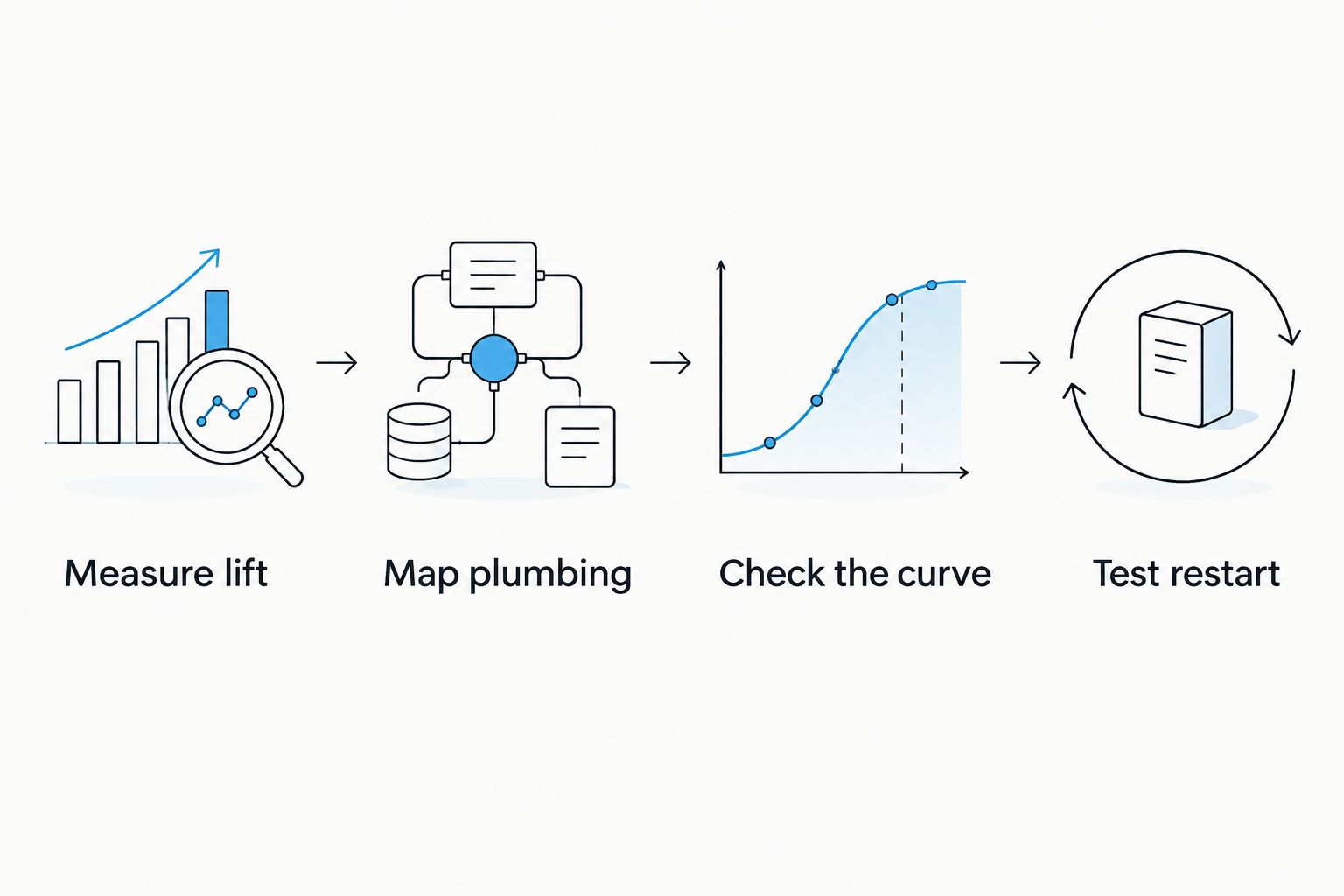
For a 2026 reef build, write down the installation details before comparing pump specifications. Use this sequence to turn a broad shortlist into a suitable choice.
Measure lift
Measure the vertical rise from the operating water level in the return chamber to the discharge point. Do not substitute aquarium height for the actual lift.
Map plumbing
Record pipe diameter, bends, valves and any equipment branches. Vertical lift and friction both reduce delivered flow, so the pump's maximum output is not your final return rate.
Check the curve
Read the manufacturer's flow-versus-head curve for the exact model. Choose against your required delivered flow, then check that the drain and filtration circuit can handle it.
Test restart
After installation, switch the return off under supervision and observe drain-back. Restart it and confirm stable operation, sufficient intake submersion and a safe sump water level.
Keep access to the pump clear. A return pump that is difficult to remove encourages deferred cleaning, and accumulated debris or deposits can reduce flow.
Return pump products to inspect
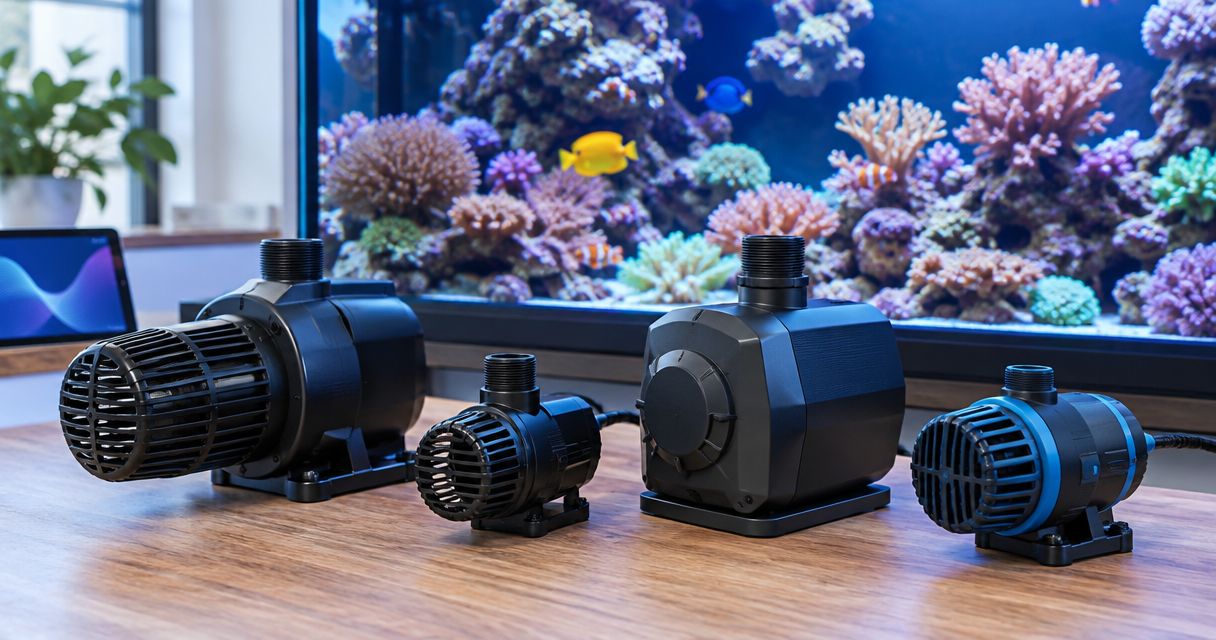
Krakking Korals lists the following reef aquarium pump options. Compare the exact model details with your measurements; these cards are not substitutes for pump curves or chamber dimensions.


How the pumps are ranked
This 2026 ranking assigns each model a distinct installation or control role using the stated product details. It prioritises application, listed output, control choices and the checks required for a safe installation.
The order does not claim measured differences in noise, electricity consumption or lifespan. Fit and delivered flow decide the final winner.
Which return pump should you choose?
Start with Vectra M2 for a sump-based shortlist and Axis 20 for an all-in-one shortlist. Assess Axis 40 or Axis 90 when the smaller Axis model falls short, Vectra L2 for a verified higher-flow circuit, and Jebao MDP when onboard LCD control matters.
For Krakking Korals reef aquarium return pumps, the decisive question is simple: does the exact model deliver the required flow through your plumbing? Buy the pump that passes that check, not the pump with the largest headline figure.
FAQ
What's the best return pump for reef tank setups in 2026?
EcoTech Marine Vectra M2 is the default sump-based shortlist pick in this guide, subject to pump-curve sizing. Aqua Illumination Axis 20 is the all-in-one shortlist pick; chamber fit and delivered flow decide suitability.
Is Vectra L2 better than Vectra M2?
Vectra L2 has a higher listed capacity, but it is not automatically the better choice. Choose L2 when its delivered flow meets a requirement that M2 cannot satisfy at your operating head.
Can I use a return pump instead of a wavemaker?
A return pump and a wavemaker serve different jobs. The return moves water through the filtration circuit, while wavemakers provide circulation within the display around corals and rockwork.
Does a 1,500 LPH pump deliver that flow into my reef?
The 1,500 LPH listing does not establish flow through your installed plumbing. Vertical lift, pipe friction, bends and equipment branches affect delivered output; read the exact model's pump curve.
Which return pump has onboard LCD control?
The Jebao MDP Series description lists an LCD screen and Wi-Fi control. Select the exact MDP model against your flow requirement rather than choosing from the series name alone.
What should I check before replacing an all-in-one return pump?
Check chamber dimensions, intake clearance, outlet connection and delivered flow before replacing an all-in-one return pump. Also confirm that you can remove the pump for cleaning and that shutdown and restart are safe.
Should I choose a bigger return pump for SPS corals?
SPS coral circulation needs do not automatically justify a bigger return pump. Size the return for the filtration circuit and provide suitable display circulation with wavemakers.
One last thing
Test a power-off event before leaving the aquarium unattended. A correctly sized pump can still sit in an unsafe installation if the sump cannot contain drain-back water.
Repeat that check after changing return outlets or plumbing. The pump choice has not changed, but the amount of water draining back can.