Best overall for routine reef-water preparation: the 4 Stage 75GPD RODI System, provided your source water and installation suit its filtration requirements. This 2026 guide explains how to choose an aquarium RO/DI system, check its output and prepare freshwater top-ups and saltwater without confusing a production rating with actual performance.
- The 4 Stage 75GPD RODI System is the practical starting pick for freshwater top-ups and saltwater preparation.
- Choose the best ro di system for aquarium use by source-water treatment, measured output and replacement-filter access.
- The listed 75GPD rating equals approximately 284 litres per day; actual production depends on operating conditions.
- Use unsalted RO/DI water for evaporation replacement and separately mixed saltwater for water changes.
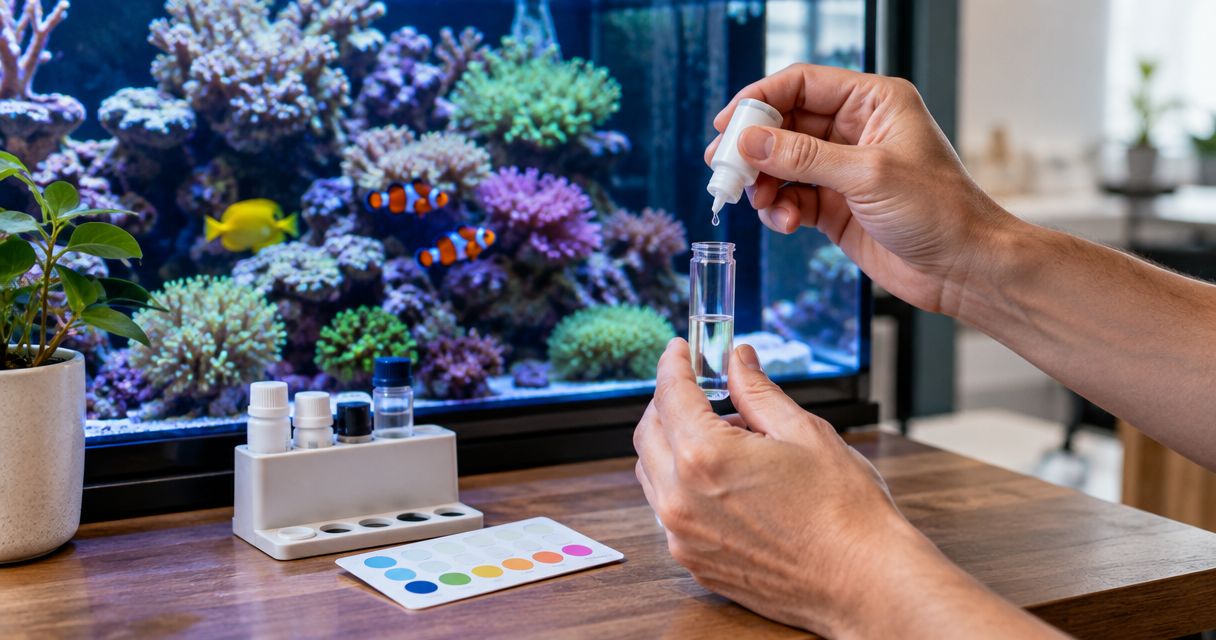
- Check final-water TDS before use; aim for 0 ppm rather than judging purity by appearance.
Why this matters
Your reef receives whatever comes through its make-up water. Tap water composition varies, and repeated top-ups introduce dissolved material without removing the salts already in the aquarium.
RO/DI gives you control over that input. Reverse osmosis reduces dissolved substances, while deionisation removes remaining ions; neither process replaces cycling, salinity checks or regular reef testing.
Krakking Korals’ 4 Stage 75GPD RODI System is the starting pick for reef keepers who need water for evaporation replacement and salt mixing. Choose it by those jobs, not by the number of filter housings alone.
What makes the best RO/DI system for an aquarium?
Use these criteria before comparing capacity labels. For a 2026 reef setup, the important question is whether the unit treats your actual feed water and produces enough usable water between maintenance tasks.
- Source-water treatment: Confirm whether your water supplier uses chlorine or chloramine, then check that the prefiltration is suitable. Do not assume every carbon cartridge handles both equally.
- Final-water quality: Measure the finished water with a suitable TDS meter. A target of 0 ppm is a practical check for reef RO/DI water, not proof that every possible contaminant is absent.
- Usable production: Match output to evaporation replacement, water changes and reserve storage. A membrane rating is not a promise of that output at your tap.
- Serviceability: Check replacement sediment filters, carbon cartridges, membranes and DI resin before choosing a unit. Confirm dimensions and compatibility rather than assuming cartridges are interchangeable.
- Installation safety: Plan the feed connection, reject-water drain and collection container. Include overflow protection appropriate to your installation.
- Monitoring access: A pressure gauge and measurements before and after the DI stage help separate membrane problems from exhausted resin. Check which monitoring components are included rather than assuming they come with the unit.
Aquarium water options at a glance
The useful comparison is complete RO/DI treatment versus incomplete treatment. The alternatives below are water-preparation approaches, not additional branded products.
| Option | Best for | Standout feature | Key limitation |
|---|---|---|---|
| 4 Stage 75GPD RODI System | Routine reef top-ups and saltwater preparation | Listed four-stage RO/DI treatment with a 75GPD production rating | Suitability still depends on feed-water treatment, pressure and verified output |
| RO-only water | An intermediate stage before DI polishing | Reduces dissolved substances through a membrane | Residual dissolved ions remain; it is not equivalent to verified RO/DI water |
| Dechlorinated tap water | Removing disinfectant from tap water | Addresses chlorine when the conditioner is suitable | Conditioning does not remove the broader dissolved mineral load |
For a reef aquarium, choose verified RO/DI output over assuming that clear water is clean water. Neither appearance nor the absence of a chlorine smell establishes suitability for repeated top-ups.
1. 4 Stage 75GPD RODI System: best for routine reef-water preparation
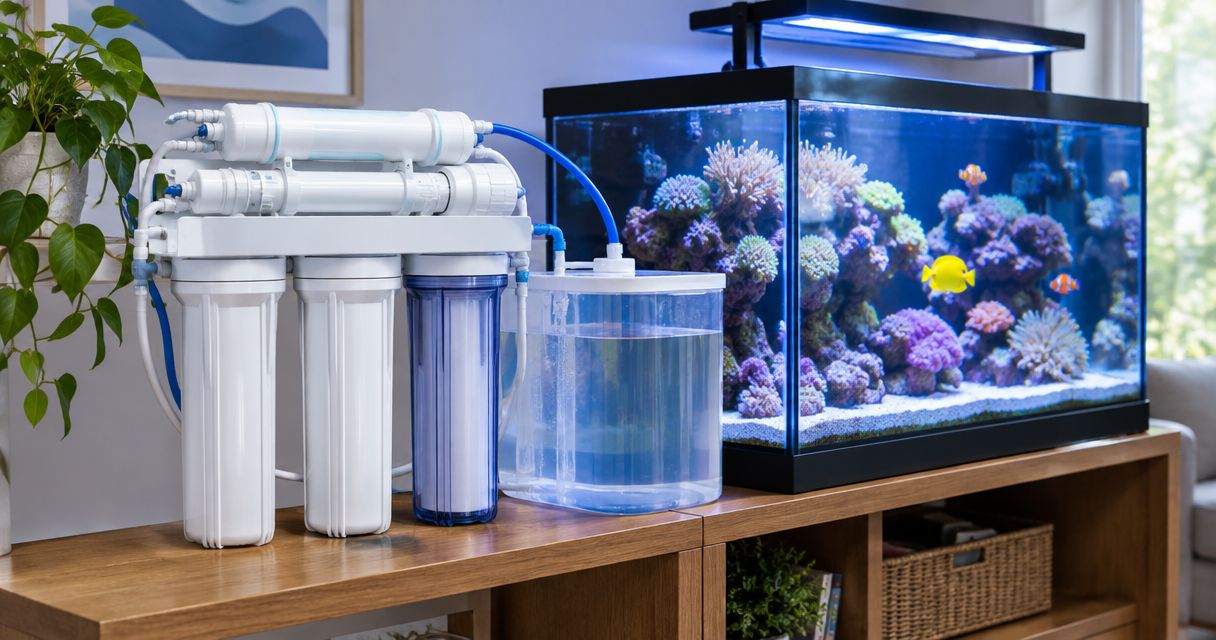
The 4 Stage 75GPD RODI System is a reverse-osmosis and deionisation unit listed by Krakking Korals for saltwater aquarium top-ups. Its stated capacity is 75 US gallons per day, approximately 284 litres per day under the conditions used for its rating.
That rating describes production capacity, not an aquarium-size recommendation. Your practical requirement depends on how much freshwater evaporates and how much saltwater you prepare, while actual output depends on pressure, temperature and feed-water characteristics.
4 Stage 75GPD RODI System pros:
- Includes RO and DI treatment rather than stopping at reverse osmosis.
- Provides a freshwater preparation option for evaporation replacement.
- Produces source water that you can use separately for marine salt mixing.
- Has a stated production rating you can compare against your measured requirements.
4 Stage 75GPD RODI System cons:
- Its nominal production rating does not establish output at your installation.
- A four-stage label alone does not establish suitability for chloramine-treated water.
- Filters and DI resin require monitoring and replacement; the unit is not maintenance-free.
Best for: Reef keepers preparing freshwater top-ups and batches of saltwater, with a suitable feed connection, drain and storage container.
For a 2026 installation, check the supplied connection hardware, filtration specifications and monitoring equipment before planning your water station. Follow the unit’s operating instructions for commissioning and cartridge changes.
Verdict: Buy when the feed-water requirements, installation and measured production match your reef’s needs.
When the other water approaches fall short
RO-only water: best as an intermediate treatment stage
Reverse osmosis does most of the dissolved-solids reduction in a typical RO/DI arrangement. The DI stage then polishes the membrane’s product water by removing remaining ions.
RO-only water pros: It reduces the dissolved load and gives you a useful sampling point for assessing membrane performance.
RO-only water cons: It leaves residual dissolved substances and does not provide the same final treatment as RO followed by functioning DI resin.
Best for: Measuring membrane performance before water enters the DI stage.
Verdict: Hold as an intermediate stream; do not treat RO-only output as equivalent to verified RO/DI water.
Dechlorinated tap water: best for disinfectant treatment only
A suitable conditioner treats the disinfectant it is designed to address. It does not turn tap water into RO/DI water or remove its overall dissolved mineral content.
Dechlorinated tap water pros: Conditioning addresses a specific water-treatment requirement without an RO membrane.
Dechlorinated tap water cons: The dissolved input remains variable, and repeated evaporation replacement adds that material to your reef.
Best for: Disinfectant treatment, not a substitute for reef-water purification.
Verdict: Skip as the default source for reef top-ups and salt mixing.
Understand the four filtration jobs
A typical four-stage reef RO/DI arrangement uses sediment filtration, carbon filtration, reverse osmosis and deionisation. Confirm the actual cartridge arrangement in the unit’s documentation; the stage count alone does not tell you cartridge specifications.
- Sediment filtration: Captures particles and helps protect downstream filtration.
- Carbon filtration: Treats disinfectants according to the cartridge’s capabilities and operating requirements.
- Reverse osmosis: Separates a lower-dissolved-solids product stream from a reject-water stream.
- Deionisation: Removes remaining dissolved ions from the membrane’s product water.
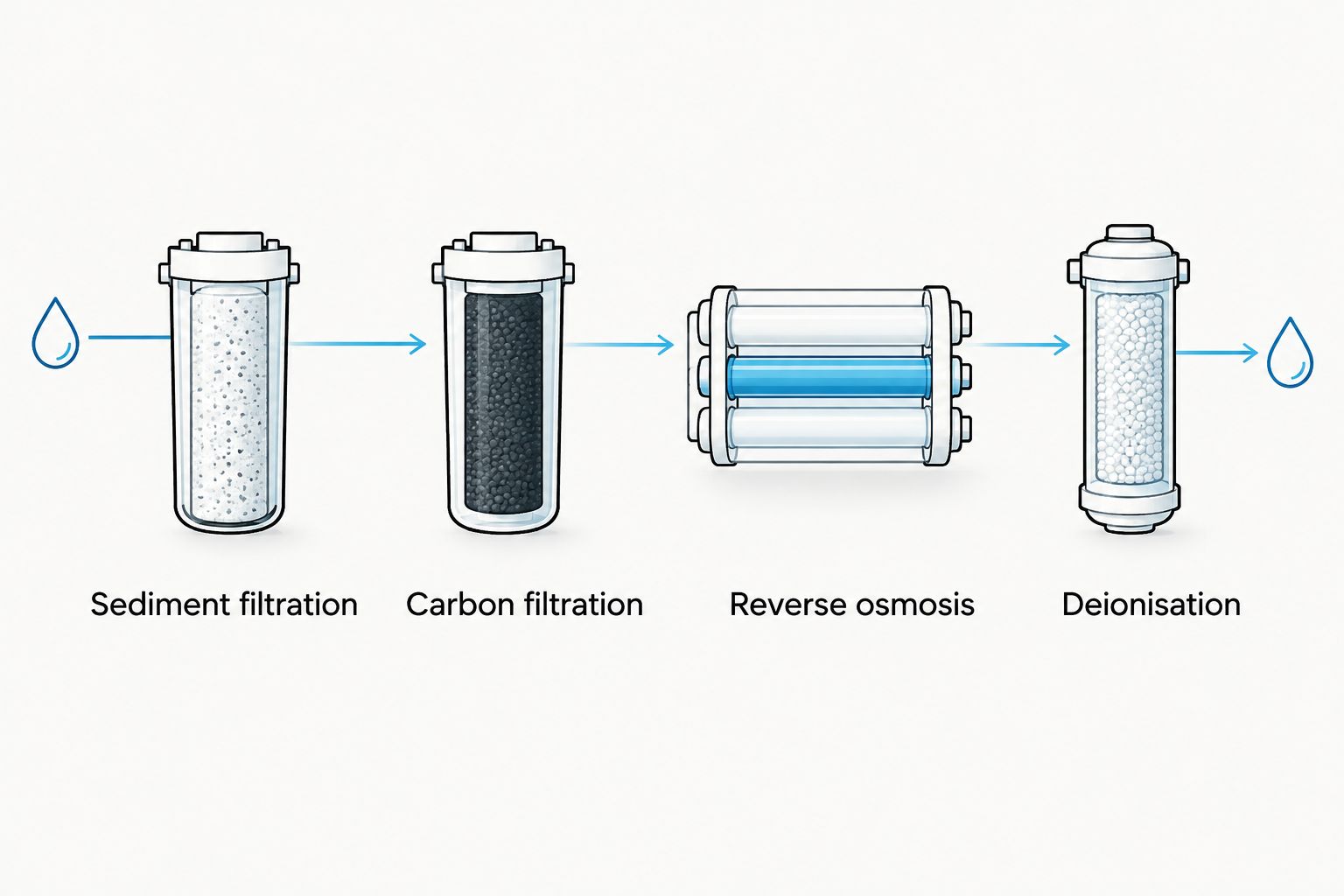
Carbon treatment deserves particular attention when assessing municipal water. Check your supplier’s treatment information and the filter manufacturer’s requirements; a TDS reading does not verify that chlorine or chloramine removal is adequate.
Size production around your water routine
Start with measured consumption rather than display-tank volume. Record evaporation replacement and your usual water-change volume, then decide how much prepared water you need between production sessions.
The listed 284 litres per day is a nominal conversion of the 75GPD rating. Cold feed water and insufficient pressure reduce production, so check your own collection rate after commissioning instead of scheduling water changes from the label.
Use this checklist for your 2026 water station:
- Record how much freshwater your ATO actually uses.
- Record the saltwater volume you normally replace.
- Decide where you will keep freshwater and mixed saltwater separately.
- Measure the unit’s production over a timed collection period.
- Leave room in your routine for filter servicing and unplanned water changes.
Storage bridges the gap between slow production and a large water change. It does not improve filtration, and it must not become a source of contamination after the water leaves the unit.
Install and commission without shortcuts
Position the system where you can inspect tubing, service cartridges and manage reject water. Keep the collection container accessible rather than hiding the entire installation behind the aquarium cabinet.
Follow this sequence:
- Check feed water: Confirm the disinfectant treatment and the unit’s required operating conditions.
- Connect safely: Use the specified fittings, secure tubing and route reject water to an appropriate drain.
- Flush as directed: Follow the manufacturer’s instructions before collecting aquarium water.
- Test output: Check final-water TDS and measure production under your actual conditions.
- Store separately: Keep freshwater collection equipment separate from salt-mixing equipment.
Inspect every connection while the system is operating. Do not leave a new installation unattended before checking for leaks and testing its collection shut-off arrangement.
A float valve is not a reason to connect unmonitored production directly to your aquarium. Prepare water in a separate reservoir, then use a controlled top-up arrangement appropriate to your reef.
Use freshwater for top-ups and saltwater for water changes
Evaporation removes water while leaving salt behind. Replace that lost volume with unsalted RO/DI water; replacing it with saltwater raises salinity.
Water changes are different. Removing aquarium water also removes salt, so prepare replacement saltwater separately and check its salinity before use.
If you are selecting a mix for your 2026 routine, the reef salt mixes guide covers that next decision. Keep source-water purification and salt selection separate: neither corrects mistakes in the other.


The RO/DI unit and marine salt serve different jobs. Keep salt out of the freshwater reservoir, and use dedicated mixing equipment to avoid carrying salt back into your next TDS sample.
Maintain the system by measurements
Check finished water regularly and record changes in production. Do not wait for nuisance algae or unhappy SPS to tell you that your water-preparation equipment needs attention.
A final-water reading above your 0 ppm target calls for investigation before use. Take a fresh sample in a clean container, verify the meter’s condition and compare readings before and after DI if your installation permits.
A rising post-DI reading points towards resin exhaustion or another treatment problem. Reduced production calls for checks of feed pressure, temperature, prefilter condition and membrane operation; replacing resin does not fix every fault.
Replace cartridges according to the manufacturer’s requirements and your operating conditions. Colour-changing resin is a useful visual aid, but output measurements remain the practical check.
For your 2026 maintenance record, note cartridge changes, TDS readings and collection performance. Trends make troubleshooting more useful than a single reading taken after a problem appears.
How the recommendation is ranked
This recommendation prioritises complete RO/DI treatment, the stated production rating and suitability for freshwater preparation. The comparison separates a complete system from water approaches that leave treatment unfinished.
It is not a laboratory performance ranking or a claim that stage count predicts contaminant removal. The deciding evidence is suitable prefiltration plus acceptable measured output at your installation.
Which aquarium RO/DI system should you choose?
Choose the 4 Stage 75GPD RODI System as the starting option for routine top-ups and saltwater preparation. Confirm source-water compatibility, installation requirements and production before committing it to your reef routine.
Krakking Korals’ RO/DI system recommendation is about controlling the water entering your aquarium, not correcting nutrient management inside it. Keep testing, flow, feeding and maintenance in place after improving source water.
FAQ
What's the best RO DI system for aquarium use in 2026?
The 4 Stage 75GPD RODI System is the starting pick here for reef top-ups and saltwater preparation. Confirm that its prefiltration suits your source water and verify final-water quality and production at your installation.
Is RO water the same as RO/DI water?
No, RO water has passed through reverse osmosis but not necessarily deionisation. DI treatment removes remaining dissolved ions after the membrane, so RO-only output is not equivalent to verified RO/DI output.
How much water does a 75GPD aquarium system produce?
A 75GPD rating represents approximately 284 litres per day under the conditions used for that rating. Actual production depends on feed pressure, temperature, water characteristics and equipment condition.
What TDS should reef RO/DI water have?
Aim for a final-water TDS reading of 0 ppm before using it for reef top-ups or salt mixing. TDS is a useful dissolved-solids check, but it does not identify individual contaminants or verify disinfectant removal.
Can I use RO/DI water directly for aquarium top-ups?
Yes, use unsalted RO/DI water to replace evaporation in a saltwater aquarium. Prepare saltwater separately for water changes, because those remove both water and salt.
Does a four-stage RO/DI system remove chloramine?
The stage count alone does not establish chloramine treatment. Check the carbon cartridge's documented capabilities, operating requirements and suitability for your supplier's water treatment.
When should I replace DI resin?
Investigate and replace exhausted resin when final-water measurements show it is no longer meeting your target. Confirm the reading with clean sampling equipment and follow the system manufacturer's servicing instructions.
One last thing
Test the water where you collect it, not just where it leaves the unit. A clean output stream can pick up salt residue from a mixing bucket, making your finished-water reading misleading.
For your 2026 setup, dedicate a clean container to freshwater sampling and label your freshwater reservoir clearly. That simple separation prevents a maintenance decision being driven by the wrong sample.